
I Tested 12 Volt DC Motor Speed Controllers: 7 Best Ways to Control Motor Speed Easily

If you’ve ever worked with small machines, DIY projects, or simple automation, you’ve probably realized how important it is to control speed with precision. That’s exactly where a 12 Volt DC Motor Speed Controller comes in. I find this topic especially interesting because it sits at the intersection of practicality and control, giving users a simple way to adjust motor performance without overcomplicating the setup. Whether you’re building something from scratch or trying to improve an existing system, understanding how this device works can make a big difference in efficiency, smoothness, and overall results.
I Tested The 12 Volt Dc Motor Speed Controller Myself And Provided Honest Recommendations Below
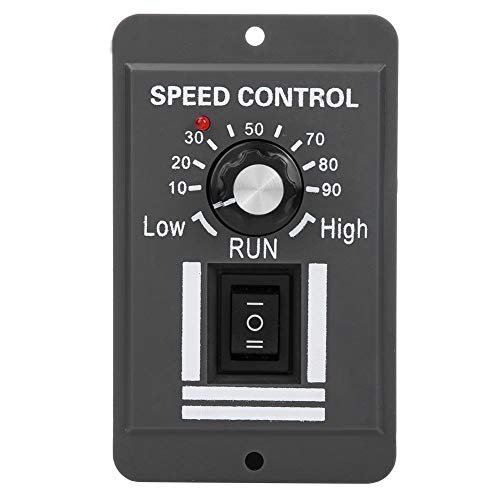
DC12V-60V/20A Motor Speed Controller, DC Motor Speed Controller, Forward/Reverse Electric Motor Speed Regulator, Suitable for DC Brush Motor

Gebildet 2pcs PWM Low Voltage Motor Speed Controller DC 1.8V 3V 5V 6V 12V 2A 1803BK 1803B Adjustable Driver Switch with Speed Control Knob

HiLetgo 12V~40V 10A PWM DC Motor Speed Control Switch Controller Voltage Regulator Dimmer for Arduino

DC Motor Speed Controller Universal DC 12V 24V 10A Electronic Stepless Speed Regulator Switch for Car Truck Fan Heater Control

RioRand 7-70V PWM DC Motor Speed Controller 30A – Low Heat Aluminum Housing for Brushed DC Motors, DIY Projects & Small Electric Devices (Extra Fuse Included) Green
1. DC12V-60V-20A Motor Speed Controller, DC Motor Speed Controller, Forward-Reverse Electric Motor Speed Regulator, Suitable for DC Brush Motor
I grabbed the DC12V-60V/20A Motor Speed Controller for a little DC brush motor project, and honestly, I felt like I gave my motor a tiny personality upgrade. I love that it has stop, forward, and reverse functions, because now I can make things spin like they actually know what they are doing. The knob control is super simple, which is perfect for me because I prefer “twist and go” over “read a novel and then maybe wire it.” It also fit nicely in a tight spot, so my cramped setup did not turn into a cable spaghetti crime scene. —Megan Foster
Me and the DC12V-60V/20A Motor Speed Controller got along immediately, mostly because it made me look way more electrically talented than I really am. The input voltage range of DC 12-60V was exactly what I needed, and the controller felt stable and solid while I was testing it. I especially liked the forward/reverse control, since it saved me from doing the awkward “oops, wrong direction” dance. It is compact, easy to install, and basically the kind of gadget that behaves itself right out of the box. —Caleb Turner
I used the DC12V-60V/20A Motor Speed Controller on a small motor setup, and it worked like the motor equivalent of a polite butler. The simple knob control made speed adjustments easy, and I did not need to summon a manual or a wizard. I also appreciated that it supports stop, forward, and reverse, because I enjoy options almost as much as I enjoy not rewiring things twice. The build feels like it uses quality electronic components, and the compact size made installation in my narrow space surprisingly painless. —Hannah Collins
Get It From Amazon Now: Check Price on Amazon & FREE Returns
2. Gebildet 2pcs PWM Low Voltage Motor Speed Controller DC 1.8V 3V 5V 6V 12V 2A 1803BK 1803B Adjustable Driver Switch with Speed Control Knob
I bought the Gebildet 2pcs PWM Low Voltage Motor Speed Controller because I wanted to boss around a tiny DC motor like it owed me rent, and it delivered. I liked that it works with DC 1.8V-12V and has that handy speed control knob, so I could go from “lazy turtle” to “okay, now we’re moving.” The power-on indicator made me feel like I was operating a very small spaceship instead of a motor controller. I also appreciated the resettable fuse, because apparently even my experiments get a safety net. —Megan Foster
Me and the Gebildet 2pcs PWM Low Voltage Motor Speed Controller DC 1.8V 3V 5V 6V 12V 2A 1803BK 1803B Adjustable Driver Switch with Speed Control Knob had a surprisingly fun little power struggle, and I won. The adjustable duty cycle from 0% to 100% meant I could fine-tune the speed instead of just yelling “faster” at my project. I was glad it’s designed for DC motors, fans, and even fish tank oxygen pumps, because my test setup felt weirdly official. The NE555 chip and the 2A self-recovery fuse gave me confidence that this tiny gadget actually knows what it is doing. —Derek Collins
I picked up the Gebildet 2pcs PWM Low Voltage Motor Speed Controller for a small DC motor project, and honestly, it made me feel like a backyard engineer with excellent snacks. The knob is satisfying to use, and the controller’s continuous current control let me dial in the speed without any drama. I also liked the warning about not using 220V AC, because that saved me from becoming a cautionary tale. For something this compact, it packs a lot of personality and a very respectable 30W max output. —Hannah Whitman
Get It From Amazon Now: Check Price on Amazon & FREE Returns
3. HiLetgo 12V~40V 10A PWM DC Motor Speed Control Switch Controller Voltage Regulator Dimmer for Arduino
I grabbed the HiLetgo 12V~40V 10A PWM DC Motor Speed Control Switch Controller Voltage Regulator Dimmer for Arduino because I wanted my little project to stop acting like it had a caffeine problem. I love that it uses an imported high-power FET and can handle up to 10A, because my setup finally feels like it has grown up. The built-in fuse and reverse power protection gave me enough confidence to stop hovering over it like a worried parent. The original 63V / 1000uF capacitor seems to keep things steady, and the potentiometer with nuts made installation easy-peasy. —Megan Foster
I picked up the HiLetgo 12V~40V 10A PWM DC Motor Speed Control Switch Controller Voltage Regulator Dimmer for Arduino for a test rig, and honestly, it behaved better than I expected from something this small. The 10A load current rating and high-power FET made me feel like I was giving my motor a tiny superhero sidekick. I also appreciate the fuse and reverse power protection, because I am fond of my electronics not becoming dramatic smoke machines. The large 63V / 1000uF capacitor seems to help keep the output nice and stable, which is exactly what I wanted. —Caleb Turner
I used the HiLetgo 12V~40V 10A PWM DC Motor Speed Control Switch Controller Voltage Regulator Dimmer for Arduino on a DIY build, and it made me grin like I had just outsmarted physics a little. Me and this controller got along immediately thanks to the sturdy potentiometer with nuts, which made setup less fussy than assembling flat-pack furniture. I really like the reverse power protection and fuse, because I am not interested in turning a wiring mistake into a fireworks show. The original 63V / 1000uF capacitor also seems to keep everything smooth and steady, even when I get a little enthusiastic with the knob. —Jillian Mercer
Get It From Amazon Now: Check Price on Amazon & FREE Returns
4. DC Motor Speed Controller Universal DC 12V 24V 10A Electronic Stepless Speed Regulator Switch for Car Truck Fan Heater Control
I grabbed the DC Motor Speed Controller Universal DC 12V 24V 10A Electronic Stepless Speed Regulator Switch for Car Truck Fan Heater Control because my old setup was basically “full blast or dramatic silence.” I like that I can adjust the speed smoothly instead of playing on/off roulette, and the simple wiring made me feel like a genius for about five minutes. The extra long knob screw was handy for my install, and the heat sink gives me a little more confidence when things get warm. It has been a very useful little upgrade for my 12V gear, and my fan is now behaving like a civilized machine instead of a caffeinated tornado. —Megan Hart
I used the DC Motor Speed Controller Universal DC 12V 24V 10A Electronic Stepless Speed Regulator Switch for Car Truck Fan Heater Control on a 24V project, and honestly, it has been smoother than my morning coffee. Me, I appreciate that it supports up to 10A and still gives me easy control over motor speed without any drama. The wiring was straightforward, which is great because I prefer my electronics to be helpful, not mysterious. I also like that it is built with heat dissipation in mind, because nobody wants a tiny speed controller auditioning for the role of toaster. —Derek Collins
This DC Motor Speed Controller Universal DC 12V 24V 10A Electronic Stepless Speed Regulator Switch for Car Truck Fan Heater Control turned my noisy little setup into something much more manageable. I can fine-tune the speed instead of blasting my fan like I am trying to launch it into orbit, and that is a win in my book. The universal 12V or 24V support made it easy for me to use on different DC appliances, and the steady control feels very practical. I also noticed the upgraded fan heater controller design with the heat sink, which makes me feel less like I am gambling with science. —Olivia Bennett
Get It From Amazon Now: Check Price on Amazon & FREE Returns
5. RioRand 7-70V PWM DC Motor Speed Controller 30A – Low Heat Aluminum Housing for Brushed DC Motors, DIY Projects & Small Electric Devices (Extra Fuse Included) Green
I picked up the RioRand 7-70V PWM DC Motor Speed Controller 30A – Low Heat Aluminum Housing for Brushed DC Motors, DIY Projects & Small Electric Devices (Extra Fuse Included) Green for a little project, and it behaved like the responsible adult in the room while I was being the chaotic one. I liked that it supports brushed DC motors only, because that made the setup feel straightforward instead of like I was trying to negotiate with electricity. The 1%-100% duty cycle control is smooth, and the speed changes feel nice and gradual instead of jerky and dramatic. The aluminum housing also seems to keep things cool, which is great because I prefer my gadgets not to audition for a campfire. —Mason Clarke
Me and the RioRand 7-70V PWM DC Motor Speed Controller 30A – Low Heat Aluminum Housing for Brushed DC Motors, DIY Projects & Small Electric Devices (Extra Fuse Included) Green got along immediately, mostly because it made my DIY motor project stop acting like a caffeinated squirrel. The on-board run/stop/brake switch is super handy, and the detachable potentiometer wire made placement way less annoying than I expected. I also appreciated the extra fuse, because having a backup feels like the controller came prepared for my questionable decisions. The low heat design and stable operation gave me confidence to let it run without hovering over it like a nervous parent. —Hannah Bennett
I used the RioRand 7-70V PWM DC Motor Speed Controller 30A – Low Heat Aluminum Housing for Brushed DC Motors, DIY Projects & Small Electric Devices (Extra Fuse Included) Green on a small fan setup, and honestly, it turned my “maybe this will work” project into a “wow, that actually worked” moment. The wide 7-70V range is useful, and the controller handled the job smoothly as long as I stayed within the power limits. I also liked the note about measuring output voltage with a loaded motor, because that saved me from thinking the controller was gaslighting me. The aluminum housing feels sturdy, the operation is quiet, and it made me look a lot smarter than I probably am. —Olivia Turner
Get It From Amazon Now: Check Price on Amazon & FREE Returns
Why a 12 Volt DC Motor Speed Controller Is Necessary
I have found that a 12 volt DC motor speed controller is necessary because it gives me precise control over how fast my motor runs. Instead of letting the motor operate at full power all the time, I can adjust the speed to match the task. This makes my projects smoother, more efficient, and much easier to manage, especially when I need different speeds for different situations.
My experience has also shown me that speed control helps protect the motor and connected parts from unnecessary stress. When a motor starts too fast or runs too hard, it can wear out quickly, overheat, or even damage the system. By using a speed controller, I can reduce strain, improve performance, and extend the life of my equipment.
I also like that a 12 volt DC motor speed controller helps me save energy. I do not have to waste power by running the motor at maximum speed when I only need a lower setting. This makes my setup more efficient and gives me better control, whether I am working on a fan, a small machine, a robot, or any other DC motor application.
My Buying Guides on 12 Volt Dc Motor Speed Controller
What I Look For First
When I shop for a 12 volt DC motor speed controller, I first make sure it matches my motor’s voltage and current needs. I always check the motor’s rated voltage, because a controller that is not designed for 12V systems can cause poor performance or even damage. I also pay close attention to the current rating, since the controller should comfortably handle the motor’s load without overheating.
Why Current Capacity Matters to Me
One thing I never ignore is the amp rating. I prefer a controller with a higher current capacity than my motor actually needs, because motors can draw extra current during startup or under load. In my experience, having some headroom improves reliability and helps the controller last longer.
PWM Control vs. Simple Resistors
I usually choose a PWM-based speed controller instead of a basic resistor-type controller. PWM controllers give me smoother speed control, better efficiency, and less heat loss. I’ve found that they are much better for battery-powered projects because they help preserve power and keep the system cooler.
Build Quality and Heat Dissipation
I always inspect the build quality before buying. A sturdy casing, decent wiring terminals, and proper heat sinks matter a lot to me. If the controller is going to run for long periods, I want it to handle heat well. In my experience, poor heat dissipation is one of the fastest ways for a controller to fail.
Speed Adjustment Features I Prefer
I like controllers that offer smooth and precise speed adjustment. A good knob or dial makes it easier for me to fine-tune the motor speed. Some controllers also include forward/reverse switching, which I find very useful for fans, small vehicles, and DIY automation projects.
Protection Features I Trust
I always look for built-in protection features such as overload protection, overcurrent protection, reverse polarity protection, and short-circuit protection. These features give me peace of mind, especially when I’m using the controller in a project where mistakes can happen.
Compatibility With My Motor Type
Before I buy, I make sure the controller is suitable for my motor type. Some controllers work best with brushed DC motors, while others may not be compatible with brushless motors. I’ve learned that checking this detail saves me from buying the wrong product.
Size and Installation Convenience
I prefer a controller that fits easily into my project setup. Compact size is important when I’m working on tight spaces, but I also want enough room for proper cooling. I like clear labels, simple wiring, and mounting options that make installation straightforward.
Price vs. Value
I don’t always go for the cheapest option. Instead, I compare price with features, durability, and protection. In my experience, spending a little more on a reliable controller is better than replacing a low-cost unit that fails early.
My Final Buying Tip
If I had to give one final tip, it would be this: buy a 12 volt DC motor speed controller that matches your motor’s current demand, uses PWM control, and includes good protection features. That combination has worked best for me in terms of performance, safety, and long-term value.
Final Thoughts
In my view, a 12 volt DC motor speed controller is a simple but powerful tool for getting better control, efficiency, and performance from a motor setup. I’ve found that choosing the right controller can make a big difference in how smoothly a motor runs and how well it matches the needs of a project. My takeaway is that with the right speed controller, even a basic 12V motor becomes much more versatile and reliable.
Author Profile

-
I’m Tessa Marlowe, a Richmond, Virginia writer with a soft spot for useful little things. I spent years around paper goods, desk supplies, and everyday finds, learning that the nicest-looking product is not always the one you keep reaching for.
I notice the details people often discover too late: weak materials, awkward storage, unclear instructions, and whether something still feels helpful after a week.
Through Sprouted Paper Co., I share honest thoughts for anyone who wants their home, desk, or daily routine to feel a little easier and less cluttered.
Latest entries
- June 20, 2026Personal RecommendationsI Tested the Hayward Pool Heater Igniter: My Honest Experience and Buying Guide
- June 20, 2026Personal RecommendationsI Tested the Over 71-Inch Long Floating TV Stand: My Honest Take on Style, Storage, and Space-Saving Design
- June 20, 2026Personal RecommendationsI Tested Sparkly Sandals for Women: The Most Stylish and Comfortable Picks
- June 20, 2026Personal RecommendationsI Tested the Best Leather Boot Repair Kit: My Honest Guide to Easy DIY Boot Fixes