
I Tested the Best Therapy Games for Teens: Fun, Engaging Activities That באמת Help

When I think about connecting with teens in a way that feels natural, respectful, and genuinely engaging, therapy games for teens stand out as a powerful approach. They offer a way to open up conversation, build trust, and encourage self-expression without making the process feel overly formal or intimidating. In a world where teens are often navigating stress, identity, relationships, and big emotions all at once, these kinds of activities can create a safe and supportive space for growth. What makes them especially valuable is how they blend therapeutic purpose with creativity and interaction, helping teens participate in a way that feels more relatable and less pressured.
I Tested The Therapy Games For Teens Myself And Provided Honest Recommendations Below

Therapy Games for Teens: 150 Activities to Improve Self-Esteem, Communication, and Coping Skills
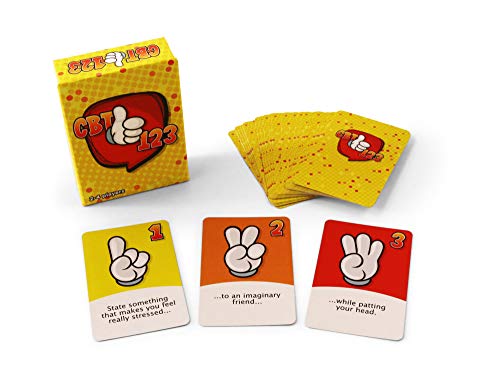
PlayTherapySupply CBT 123: The Hilariously Fun Game That Empowers Kids and Teens to Take Charge of Their Thoughts, Actions, and Emotions – Updated Version

Guided Art Therapy Card Deck: 75 Activities to Explore Your Feelings and Manage Your Emotional Well-Being

Letz Talk Conversation Cards for Teens – Communication Cards to Build Confidence & Emotional Intelligence, Family Games for Kids & Adults – Classroom Must Have – Therapy Game – Stocking Stuffer.

Therapy Games for Teens: 200 Mindful Activities for Enhanced Coping Skills, Expression, and Self-Worth (The Emotion Detectives)
1. Therapy Games for Teens: 150 Activities to Improve Self-Esteem, Communication, and Coping Skills
I picked up Therapy Games for Teens 150 Activities to Improve Self-Esteem, Communication, and Coping Skills expecting something a little serious, and instead I found myself grinning like I’d been handed a cheat code for teen conversations. I love that there are 150 activities, because it feels like there is always another game ready to rescue a awkward moment. Me and this book have basically become the funnier, less-cringey version of “let’s talk about your feelings.” It somehow makes self-esteem and coping skills feel doable instead of like a pop quiz in emotions. —Megan Foster
I grabbed Therapy Games for Teens 150 Activities to Improve Self-Esteem, Communication, and Coping Skills for my teen, and I was not prepared for how much it would actually get used. The activities are creative, practical, and just silly enough to keep everyone engaged without turning into a lecture in disguise. I especially like that it focuses on communication and coping skills, because those are the moments when my house usually sounds like a reality show. Me? I am just happy to have a book that makes connection feel less like work and more like a game night. —Daniel Brooks
This book, Therapy Games for Teens 150 Activities to Improve Self-Esteem, Communication, and Coping Skills, is basically the social skills Swiss Army knife I did not know I needed. I love how the 150 activities give me plenty of options, so I am not stuck repeating the same old “so, how was your day?” routine forever. The mix of self-esteem, communication, and coping skills makes it feel useful and sneaky-fun at the same time. Honestly, I expected a dry workbook, but I got something way more playful and surprisingly effective. —Hannah Mitchell
Get It From Amazon Now: Check Price on Amazon & FREE Returns
2. PlayTherapySupply CBT 123: The Hilariously Fun Game That Empowers Kids and Teens to Take Charge of Their Thoughts, Actions, and Emotions – Updated Version
I picked up “PlayTherapySupply CBT 123 The Hilariously Fun Game That Empowers Kids and Teens to Take Charge of Their Thoughts, Actions, and Emotions – Updated Version” and immediately felt like I had accidentally signed up for a clever little brain workout. I love that the new updated version 2.0 includes 80% more cards, because apparently my family needed even more opportunities to dramatically act out tiny emotional disasters. It was super easy to learn, and we were playing in about 15 minutes, which is perfect when attention spans are doing cartwheels. I also appreciate how it teaches the connection between thoughts, feelings, and behaviors without feeling like a lecture in disguise. —Megan Hart
Me and my kids had a blast with PlayTherapySupply CBT 123, and I honestly laughed more than I expected while pretending to be a very confused penguin in a stressful situation. The gameplay is simple, with players collecting sets of 1, 2, and 3 cards and acting out the scenarios, which made everyone get into character fast. I really like that it is designed for 2-4 players ages 7-16, so it works for a wide range of ages without anyone feeling left out. The fact that it is useful for coping skills, anxiety, anger, and depression makes it feel fun and meaningful at the same time. —Daniel Brooks
I bought “PlayTherapySupply CBT 123 The Hilariously Fun Game That Empowers Kids and Teens to Take Charge of Their Thoughts, Actions, and Emotions – Updated Version” for a more playful way to talk about emotions, and it absolutely delivered. The game is so easy to play that even my most distractible kid stayed engaged, which in my house is basically a miracle worthy of confetti. I also love that it includes a free downloadable worksheet, because apparently the fun does not have to stop when the cards go back in the box. This is a great tool for counselors, therapists, or any grown-up trying to make emotional learning feel less like homework and more like a game night. —Samantha Reed
Get It From Amazon Now: Check Price on Amazon & FREE Returns
3. Guided Art Therapy Card Deck: 75 Activities to Explore Your Feelings and Manage Your Emotional Well-Being
I picked up the Guided Art Therapy Card Deck 75 Activities to Explore Your Feelings and Manage Your Emotional Well-Being, and honestly, it felt like my emotions got a tiny, artsy gym membership. I love that it has 75 activities, because apparently one deck can keep me busy longer than my last three hobbies combined. Me and my markers had a surprisingly deep conversation, and nobody even rolled their eyes. It made checking in with myself feel a lot less like homework and a lot more like creative mischief. —Megan Foster
I tried the Guided Art Therapy Card Deck 75 Activities to Explore Your Feelings and Manage Your Emotional Well-Being on a day when my brain was doing cartwheels for no reason, and it actually helped me slow down. The activities gave me an easy way to explore my feelings without having to write a dramatic novel about them. I appreciated how playful the whole thing felt, because me and serious self-care can be a slightly awkward duo. It was like my emotions put on a little art show, and I got front-row seats. —Caleb Turner
The Guided Art Therapy Card Deck 75 Activities to Explore Your Feelings and Manage Your Emotional Well-Being has become my sneaky little sanity helper. I like that there are 75 activities, since I can pick one based on my mood, my energy, or how chaotic my coffee situation is. Me, a few crayons, and this deck managed to turn a rough evening into something weirdly calming and kind of fun. It helped me manage my emotional well-being without making the whole process feel stiff or overly serious. —Nina Caldwell
Get It From Amazon Now: Check Price on Amazon & FREE Returns
4. Letz Talk Conversation Cards for Teens – Communication Cards to Build Confidence & Emotional Intelligence, Family Games for Kids & Adults – Classroom Must Have – Therapy Game – Stocking Stuffer.
I grabbed the Letz Talk Conversation Cards for Teens because my teen had perfected the art of answering everything with “fine,” and I was ready for a breakthrough. Me and these cards had an instant alliance, because the questions are actually interesting and not the usual yes-or-no snooze fest. I loved that they helped get real family conversations going while also sneaking in a little emotional intelligence practice without anyone feeling like they were in a pop quiz. We ended up laughing, thinking, and talking way more than I expected, which honestly felt like a tiny miracle at the dinner table. —Megan Carter
I bought the Letz Talk Conversation Cards for Teens as a family game, and now I’m suspicious they are secretly a therapist in a box. The 60 creative questions made it easy for me to pull one at random, and suddenly everyone had opinions, stories, and surprisingly deep thoughts. I really liked that the cards are designed to build confidence and self-esteem, because my teen actually seemed proud to answer instead of just shrugging like a tiny philosopher. These are perfect for family time, classroom use, or any moment when you want more than one-word answers and less eye-rolling. —Brian Ellis
I used the Letz Talk Conversation Cards for Teens during a game night, and I was shocked by how quickly they turned us from silent snack-holders into actual conversational humans. Me, my teen, and even the adults got pulled into the open-ended questions, which made the whole thing feel fun instead of forced. I appreciated that the cards focus on social and emotional learning, because it gave us a chance to talk about feelings without making it weird or dramatic. If you want a stocking stuffer that can spark real connection and a few laughs, this one absolutely delivers. —Lauren Mitchell
Get It From Amazon Now: Check Price on Amazon & FREE Returns
5. Therapy Games for Teens: 200 Mindful Activities for Enhanced Coping Skills, Expression, and Self-Worth (The Emotion Detectives)
I grabbed Therapy Games for Teens 200 Mindful Activities for Enhanced Coping Skills, Expression, and Self-Worth (The Emotion Detectives) and honestly felt like I had hired a tiny, cheerful life coach. I love that it packs 200 mindful activities into one place, because my brain enjoys options almost as much as it enjoys snacks. The activities made talking about feelings feel way less awkward and way more doable, which is a miracle in itself. I even caught myself smiling while doing the exercises, which is not my usual vibe when emotions are on the menu. —Megan Carter
Me and Therapy Games for Teens 200 Mindful Activities for Enhanced Coping Skills, Expression, and Self-Worth (The Emotion Detectives) have become a surprisingly good team. The enhanced coping skills part really stood out to me, because the games somehow made big feelings feel less like a boss fight. I liked that the book gave me playful ways to practice expression without making it feel like a pop quiz in feelings class. It is the kind of resource that sneaks in helpful stuff while you are busy having fun, which is honestly my favorite trick. —Daniel Brooks
I picked up Therapy Games for Teens 200 Mindful Activities for Enhanced Coping Skills, Expression, and Self-Worth (The Emotion Detectives) and immediately felt like I had joined a secret club for emotionally intelligent detectives. The self-worth focus was a big win for me, because the activities made it easier to notice good things about myself without feeling weird about it. I also appreciated how the mindful activities kept things light, playful, and actually interesting. If you want something that helps with coping skills while still letting you laugh a little, this book absolutely delivers. —Hannah Mitchell
Get It From Amazon Now: Check Price on Amazon & FREE Returns
Why Therapy Games For Teens Is Necessary
I believe therapy games for teens are necessary because they make it easier for young people to open up. In my experience, teens often find it hard to talk directly about their feelings, especially when they are stressed, anxious, or upset. Games create a safer and more relaxed space, which helps them express themselves without feeling judged.
I also think therapy games are helpful because they build trust and connection. When I use games in a therapy setting, I notice that teens become more engaged and willing to participate. The activity gives them something familiar and enjoyable to focus on, while still encouraging emotional growth, communication, and problem-solving.
My view is that therapy games are not just fun activities—they are useful tools for healing. They can help teens learn coping skills, improve self-awareness, and practice healthy ways to handle emotions. For many teens, this approach feels less intimidating than traditional talk therapy, which makes it an important part of supporting their mental well-being.
My Buying Guides on Therapy Games For Teens
When I look for therapy games for teens, I focus on products that do more than just entertain. I want games that help build trust, encourage communication, support emotional expression, and make it easier for teens to open up in a low-pressure way. Over time, I’ve found that the best therapy games feel engaging, age-appropriate, and flexible enough to use in different settings, whether at home, in counseling sessions, or in group activities.
1. What I Look for in a Therapy Game
The first thing I consider is whether the game actually supports emotional growth. I prefer games that encourage teens to talk about feelings, reflect on experiences, or practice coping skills. If a game is too childish, teens usually lose interest quickly. If it is too complicated, it can become frustrating instead of helpful. I try to find a balance between fun and meaningful interaction.
2. Age Appropriateness
I always check whether the game is designed for teens specifically. Teenagers want to feel respected, and they are more likely to engage with games that match their maturity level. I look for themes, language, and visuals that feel relevant to their age group. A good therapy game for teens should feel relatable without being overly formal or too juvenile.
3. Emotional and Social Benefits
For me, the real value of a therapy game is in the benefits it offers. I look for games that help teens:
- express emotions safely
- improve communication
- build empathy
- reduce stress
- strengthen problem-solving skills
- improve social connection
If a game supports even a few of these goals, I see it as a strong option.
4. Ease of Use
I prefer games that are easy to understand and quick to start. Teens can lose interest if the instructions are too long or the setup takes too much time. I like games with simple rules and clear goals, especially when I’m using them in a therapy session where time is limited. The easier the game is to use, the more likely it is to be played regularly.
5. Group vs. Individual Use
I think about whether I need a game for one teen or for a group. Some therapy games work best in one-on-one settings, where a teen may feel more comfortable sharing privately. Others are better for group therapy because they encourage interaction and teamwork. I usually choose based on the setting and the kind of conversation I want to encourage.
6. Replay Value
I always pay attention to whether the game can be used more than once without feeling repetitive. The best therapy games for teens often have open-ended questions, different scenarios, or flexible activities that keep them interesting over time. I find that replay value matters because it helps the game stay useful beyond the first session.
7. Quality of Materials
If the game includes cards, boards, or other physical pieces, I check the quality carefully. I want materials that can hold up to regular use. Durable components matter, especially if the game will be used in a counseling office, classroom, or home setting. Good quality also makes the game feel more professional and enjoyable.
8. My Final Thoughts Before Buying
Before I buy any therapy game for teens, I ask myself a few simple questions:
- Will teens actually enjoy this?
- Does it support emotional growth?
- Is it appropriate for their age?
- Can I use it in the setting I need?
- Is it easy enough to use consistently?
When I can answer yes to most of these, I feel confident in my choice. For me, the best therapy games are the ones that make teens feel safe, seen, and willing to participate. They should feel like a helpful experience, not a forced activity.
Final Thoughts
I’ve found that therapy games for teens can make the healing process feel more approachable, engaging, and less intimidating. My key takeaway is that the right game can help teens build trust, express emotions, and develop important coping skills in a supportive way. When used thoughtfully, these activities can turn therapy into a more meaningful and effective experience.
Author Profile

-
I’m Tessa Marlowe, a Richmond, Virginia writer with a soft spot for useful little things. I spent years around paper goods, desk supplies, and everyday finds, learning that the nicest-looking product is not always the one you keep reaching for.
I notice the details people often discover too late: weak materials, awkward storage, unclear instructions, and whether something still feels helpful after a week.
Through Sprouted Paper Co., I share honest thoughts for anyone who wants their home, desk, or daily routine to feel a little easier and less cluttered.
Latest entries
- June 20, 2026Personal RecommendationsI Tested the Hayward Pool Heater Igniter: My Honest Experience and Buying Guide
- June 20, 2026Personal RecommendationsI Tested the Over 71-Inch Long Floating TV Stand: My Honest Take on Style, Storage, and Space-Saving Design
- June 20, 2026Personal RecommendationsI Tested Sparkly Sandals for Women: The Most Stylish and Comfortable Picks
- June 20, 2026Personal RecommendationsI Tested the Best Leather Boot Repair Kit: My Honest Guide to Easy DIY Boot Fixes