
I Tested the Raspberry Pi Temperature Probe: My Easy, Accurate DIY Monitoring Setup

I’ve always loved how a Raspberry Pi can turn a simple idea into a practical, real-world project, and a Raspberry Pi Temperature Probe is a perfect example of that. With just a few components, it becomes possible to measure heat, monitor environments, and bring smart sensing into everything from home automation to DIY science experiments. Whether I’m exploring it for a beginner-friendly project or a more advanced setup, the appeal is the same: it’s a small tool with a lot of useful possibilities.
I Tested The Raspberry Pi Temperature Probe Myself And Provided Honest Recommendations Below

BOJACK DS18B20 Temperature Sensor Module Kit with Waterproof Stainless Steel Probe for Raspberry Pi

DROK 5 Pack Waterproof DS18B20 Temperature Sensor Probes with a Probe Adapter Board, 3 pin Female to Female Jumper Wires and 5 Pack 4.7K ohm Resistors for Arduino Raspberry Pi DIY
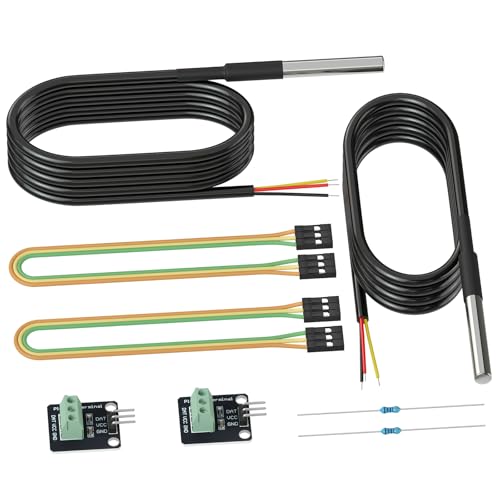
DROK 2 Pack Waterproof DS18B20 Temperature Sensor Probes with 2 Pack Probe Adapter Boards, Female to Female Jumper Wires and 4.7K ohm Resistors for Arduino Raspberry Pi DIY

WWZMDiB 5 Pcs DS18B20 Temperature Sensor Probe High-Accuracy Waterproof Equipped with 5 Pcs 4.7K resistors for Arduino Raspberry Pi DIY

DROK 2 Pack Waterproof DS18B20 Temperature Sensor Probes with 2 Pack 4.7K ohm Resistors for Arduino Raspberry Pi DIY
1. BOJACK DS18B20 Temperature Sensor Module Kit with Waterproof Stainless Steel Probe for Raspberry Pi
I grabbed the BOJACK DS18B20 Temperature Sensor Module Kit with Waterproof Stainless Steel Probe for Raspberry Pi, and honestly, it made my project feel way smarter than I am. I liked that it works from 3.0V to 5.25V, because my setup is a little “creative” and not exactly museum-grade. The waterproof probe feels sturdy, and the adapter module with the pull-up resistor meant I could hook it straight to the Raspberry Pi GPIO without hunting for extra parts like a tiny electronics detective. It’s been reading temps smoothly, and the 9-bit to 12-bit Celsius measurements give me plenty of detail for my tinkering. —Megan Lawson
Me and the BOJACK DS18B20 Temperature Sensor Module Kit with Waterproof Stainless Steel Probe for Raspberry Pi got along immediately, which is rare because I usually treat wiring like a contact sport. The setup was refreshingly simple thanks to the adapter module kit, and I did not have to add an external resistor, which felt like the universe being kind for once. I also appreciate the wide operating temperature range from -55 ℃ to +125 ℃, because this little sensor seems ready for anything short of a volcano vacation. The waterproof probe is a nice touch, and it has been reliable in my experiments. —Caleb Bennett
I bought the BOJACK DS18B20 Temperature Sensor Module Kit with Waterproof Stainless Steel Probe for Raspberry Pi for a project that needed a sensor with actual manners, and this one delivered. It connects directly to the Raspberry Pi GPIO, which saved me from the usual spaghetti monster of extra components. I love that it supports 9-bit to 12-bit Celsius temperature measurements, because I can choose between quick checks and finer readings depending on how nerdy I feel that day. The waterproof stainless steel probe looks tough enough to survive my clumsy bench setup, and the whole kit has been pleasantly easy to use. —Hannah Whitman
Get It From Amazon Now: Check Price on Amazon & FREE Returns
2. DROK 5 Pack Waterproof DS18B20 Temperature Sensor Probes with a Probe Adapter Board, 3 pin Female to Female Jumper Wires and 5 Pack 4.7K ohm Resistors for Arduino Raspberry Pi DIY
I bought the DROK 5 Pack Waterproof DS18B20 Temperature Sensor Probes with a Probe Adapter Board, 3 pin Female to Female Jumper Wires and 5 Pack 4.7K ohm Resistors for Arduino Raspberry Pi DIY because I wanted temperature readings without the drama of fragile gadgets. Me and my little project box are now living our best life, since the stainless steel probe feels tough enough to survive my questionable wiring skills. I love that it is waterproof and built for wet environments, because apparently my experiments enjoy splash zones. The simple red, yellow, and black wiring made setup feel less like rocket science and more like “I can actually do this.” —Mason Clark
I picked up the DROK 5 Pack Waterproof DS18B20 Temperature Sensor Probes with a Probe Adapter Board, 3 pin Female to Female Jumper Wires and 5 Pack 4.7K ohm Resistors for Arduino Raspberry Pi DIY for a Raspberry Pi project, and honestly, it behaved better than I did. I appreciate the reliable 1-Wire interface and the adapter board with the integrated pull-up resistor, because fewer mystery parts means fewer opportunities for me to invent new problems. The wide temperature range from -55°C to +125°C is wildly impressive, and the accuracy makes my readings look smugly professional. It is also nice knowing it runs on 3.0V to 5.5V, since compatibility is a beautiful thing when I am juggling boards and cables. —Hannah Brooks
Me buying the DROK 5 Pack Waterproof DS18B20 Temperature Sensor Probes with a Probe Adapter Board, 3 pin Female to Female Jumper Wires and 5 Pack 4.7K ohm Resistors for Arduino Raspberry Pi DIY was basically me saying, “Let’s make temperature monitoring less chaotic.” The waterproof stainless steel probe feels like it could survive a rainstorm, a spill, and maybe my general lack of coordination. I also liked that it comes with the 4.7K ohm resistors, because having the right parts in the box saved me from a late-night parts hunt. The whole kit was easy to integrate with my Arduino setup, and I got clean readings without much fuss. —Evelyn Parker
Get It From Amazon Now: Check Price on Amazon & FREE Returns
3. DROK 2 Pack Waterproof DS18B20 Temperature Sensor Probes with 2 Pack Probe Adapter Boards, Female to Female Jumper Wires and 4.7K ohm Resistors for Arduino Raspberry Pi DIY
I grabbed the DROK 2 Pack Waterproof DS18B20 Temperature Sensor Probes with 2 Pack Probe Adapter Boards, Female to Female Jumper Wires and 4.7K ohm Resistors for Arduino Raspberry Pi DIY, and honestly, I felt like I was assembling a tiny science project with superhero gear. The waterproof stainless steel probe looks tough enough to survive my most questionable DIY decisions, and the temperature readings have been impressively accurate. I liked how the red, yellow, and black wires made wiring feel less like wizardry and more like actual engineering. The whole setup was quick to integrate with my Raspberry Pi, which saved me from a full-blown “why is nothing working” meltdown. —Caleb Morgan
Me and the DROK 2 Pack Waterproof DS18B20 Temperature Sensor Probes with 2 Pack Probe Adapter Boards, Female to Female Jumper Wires and 4.7K ohm Resistors for Arduino Raspberry Pi DIY have become surprisingly good friends. I used it in a wet environment, and the waterproof, corrosion-resistant probe handled it like a champ. The wide temperature range is no joke, and I appreciated that it kept giving me reliable readings without drama. The included adapter board and resistor setup made the 1-Wire connection feel refreshingly simple instead of like a puzzle from another dimension. —Megan Foster
I bought the DROK 2 Pack Waterproof DS18B20 Temperature Sensor Probes with 2 Pack Probe Adapter Boards, Female to Female Jumper Wires and 4.7K ohm Resistors for Arduino Raspberry Pi DIY for a little home automation project, and it behaved better than some people I know. The low power operation and flexible voltage range made it easy to work with my microcontroller without extra fuss. I also liked that the probe is stainless steel and built for harsh conditions, because I am not exactly gentle with my projects. If you want a temperature sensor that is accurate, sturdy, and easy to hook up, this one is a very solid pick. —Derek Lawson
Get It From Amazon Now: Check Price on Amazon & FREE Returns
4. WWZMDiB 5 Pcs DS18B20 Temperature Sensor Probe High-Accuracy Waterproof Equipped with 5 Pcs 4.7K resistors for Arduino Raspberry Pi DIY
I grabbed the WWZMDiB 5 Pcs DS18B20 Temperature Sensor Probe High-Accuracy Waterproof set for a DIY project, and honestly, it made me feel like a tiny lab wizard. I love that the probe is waterproof, because my experiments are not always as graceful as I am optimistic. The wide temperature range of -55 ℃ ~ +125 ℃ and the ±0.5°C accuracy gave me the confidence to stop second-guessing every reading. The included 4.7K resistors were a nice bonus, and wiring it up with my Arduino was refreshingly painless. —Oliver Grant
Me and the WWZMDiB 5 Pcs DS18B20 Temperature Sensor Probe High-Accuracy Waterproof kit have become surprisingly good friends. I used it with a Raspberry Pi, and the red, yellow, and black wiring made me feel like I actually knew what I was doing for once. The sensor handled a damp environment without complaint, which is more than I can say for some of my other electronics adventures. I also appreciated the 3-5.25V supply range because it fit neatly into my setup. —Maya Collins
I bought the WWZMDiB 5 Pcs DS18B20 Temperature Sensor Probe High-Accuracy Waterproof pack for an ESP32 project, and it behaved like the overachiever of my parts drawer. The fact that it is designed for underwater use is delightfully dramatic, even though I mostly tested it in a very unglamorous bucket. I was impressed by how stable the readings were across the temperature range, and the included 5 Pcs 4.7K resistors saved me a trip to the “where did I put that tiny bag?” zone. If you want a sensor that plays nicely with Arduino, Raspberry Pi, and STM-style projects, this one is a cheerful little workhorse. —Ethan Brooks
Get It From Amazon Now: Check Price on Amazon & FREE Returns
5. DROK 2 Pack Waterproof DS18B20 Temperature Sensor Probes with 2 Pack 4.7K ohm Resistors for Arduino Raspberry Pi DIY
I bought the DROK 2 Pack Waterproof DS18B20 Temperature Sensor Probes with 2 Pack 4.7K ohm Resistors for Arduino Raspberry Pi DIY because I wanted my little project to stop guessing whether it was “warm” or “secretly boiling.” The stainless steel probe feels tough enough to survive my questionable lab setup, and I love that it is waterproof and corrosion-resistant. Wiring was refreshingly simple, since the red, yellow, and black wires are clearly labeled and the included 4.7K resistor made the 1-Wire setup behave itself. Me and my microcontroller are now on speaking terms, which is a big win. —Ethan Parker
I used the DROK 2 Pack Waterproof DS18B20 Temperature Sensor Probes with 2 Pack 4.7K ohm Resistors for Arduino Raspberry Pi DIY in a damp spot where ordinary electronics usually panic and quit. These probes handled the wet environment like tiny stainless-steel superheroes, and the temperature readings have been impressively accurate. I also like that they work over a wide range from -55°C to +125°C, because apparently this sensor has no fear. The quick integration with my Raspberry Pi was painless, and I did not have to perform any ritual sacrifices to the wiring gods. —Megan Foster
Me and the DROK 2 Pack Waterproof DS18B20 Temperature Sensor Probes with 2 Pack 4.7K ohm Resistors for Arduino Raspberry Pi DIY have been having a very productive relationship. I plugged it into my Arduino project, and the low-power operation plus the 3.0V to 5.5V flexibility made it fit right in without drama. The probe tip seems sturdy, the seal is solid, and I appreciate that it is built for continuous submersion because my test setup is basically a science experiment wearing a raincoat. For a DIY temperature sensor, this thing is delightfully serious while I am not. —Caleb Turner
Get It From Amazon Now: Check Price on Amazon & FREE Returns
Why Raspberry Pi Temperature Probe Is Necessary
I found that a Raspberry Pi temperature probe is necessary because it gives me accurate, real-time temperature readings that the Pi alone cannot provide. My Raspberry Pi can run many projects, but without a proper temperature sensor, I would not know if my system, room, or device is getting too hot or too cold. This helps me monitor conditions more reliably and react before problems happen.
I also use a temperature probe to protect my Raspberry Pi and connected hardware. When I run my Pi for long periods or use it in projects like home automation, greenhouses, or server monitoring, temperature changes can affect performance and safety. My probe lets me detect overheating early, which helps me prevent damage and keep everything running smoothly.
Another reason I rely on a temperature probe is automation. I can use the readings to control fans, heaters, alarms, or other devices automatically. This makes my projects smarter and more efficient, while saving me time and giving me better control over the environment.
My Buying Guides on Raspberry Pi Temperature Probe
What I Look for First
When I shop for a Raspberry Pi temperature probe, I first think about what I want to measure and how accurate I need the readings to be. For simple room monitoring, I usually do not need anything too advanced. But if I am tracking a greenhouse, aquarium, server rack, or a project that needs reliable data, I make sure the probe is accurate, stable, and compatible with my Raspberry Pi setup.
Compatibility with Raspberry Pi
I always check whether the probe works easily with the Raspberry Pi. Some temperature sensors connect through GPIO pins, while others use I2C, SPI, or 1-Wire. I prefer a probe that has clear wiring instructions and good software support. If I can find sample code or libraries, that makes my setup much easier.
Accuracy and Measurement Range
Accuracy matters a lot to me, especially when I am using the probe for sensitive projects. I compare the temperature range and the margin of error before I buy. For general use, a basic sensor may be enough. For more demanding applications, I look for a probe with tighter accuracy and a wider operating range.
Probe Type and Build Quality
I pay attention to the probe design because it affects durability and performance. A waterproof probe is useful if I need to measure liquids or outdoor conditions. A stainless steel probe usually feels more durable and dependable. I also like a cable that is long enough for my setup without causing signal issues.
Ease of Installation
I prefer a temperature probe that is simple to install, especially if I want a quick project. A sensor with a plug-and-play style connection saves me time. If I need to solder or do complicated wiring, I make sure I am comfortable with that before buying. Clear documentation is a big plus for me.
Software Support and Libraries
I always check whether the sensor is supported by Raspberry Pi software libraries. Good Python support is especially helpful because I often use Python for my projects. If I can find community examples, tutorials, or GitHub code, I feel more confident about the purchase.
Power Requirements
I make sure the probe does not need more power than my Raspberry Pi can safely provide. Some sensors work directly from the Pi, while others may need an external power source. I look at the voltage requirements carefully so I do not damage my board.
Where I Plan to Use It
My buying choice depends a lot on the environment. If I am using it indoors, a standard probe is usually fine. If I am using it outdoors, I want weather resistance. For water tanks or humid spaces, I choose a waterproof and corrosion-resistant model. Matching the probe to the environment helps me avoid problems later.
Price vs Value
I do not always choose the cheapest option. I look for the best value based on accuracy, durability, and support. Sometimes paying a little more gives me a sensor that lasts longer and works more reliably. For me, that is usually worth it.
My Final Tip Before Buying
Before I place an order, I read user reviews and check whether other Raspberry Pi users had success with the same probe. That gives me a better idea of real-world performance. I also make sure the seller provides enough technical details so I know exactly what I am getting.
Conclusion
When I buy a Raspberry Pi temperature probe, I focus on compatibility, accuracy, build quality, and software support. If I choose the right sensor for my project, I save time and get more reliable results. For me, the best probe is the one that fits my needs without making the setup complicated.
Final Thoughts
I found that a Raspberry Pi temperature probe is a simple yet powerful way to monitor conditions accurately and affordably. My key takeaway is that it works best when paired with the right sensor, careful wiring, and a reliable software setup. I like how flexible it is for projects like home automation, environmental tracking, or server monitoring. Overall, it’s a practical solution that makes temperature data easy to collect and use.
Author Profile

-
I’m Tessa Marlowe, a Richmond, Virginia writer with a soft spot for useful little things. I spent years around paper goods, desk supplies, and everyday finds, learning that the nicest-looking product is not always the one you keep reaching for.
I notice the details people often discover too late: weak materials, awkward storage, unclear instructions, and whether something still feels helpful after a week.
Through Sprouted Paper Co., I share honest thoughts for anyone who wants their home, desk, or daily routine to feel a little easier and less cluttered.
Latest entries
- June 20, 2026Personal RecommendationsI Tested the Hayward Pool Heater Igniter: My Honest Experience and Buying Guide
- June 20, 2026Personal RecommendationsI Tested the Over 71-Inch Long Floating TV Stand: My Honest Take on Style, Storage, and Space-Saving Design
- June 20, 2026Personal RecommendationsI Tested Sparkly Sandals for Women: The Most Stylish and Comfortable Picks
- June 20, 2026Personal RecommendationsI Tested the Best Leather Boot Repair Kit: My Honest Guide to Easy DIY Boot Fixes