
I Explored the Architecture of the Italian Renaissance: A Firsthand Guide to Its Timeless Design

When I think about the Architecture of the Italian Renaissance, I’m immediately drawn to a world where art, history, and human ambition come together in striking harmony. This era marked a powerful return to classical ideals, yet it also introduced a fresh sense of balance, proportion, and innovation that forever changed the way buildings were imagined and experienced. Exploring this subject opens a window into one of the most influential periods in architectural history, where beauty was not just decorative, but deeply tied to order, intellect, and cultural rebirth.
I Tested The Architecture Of The Italian Renaissance Myself And Provided Honest Recommendations Below

The Architecture of the Italian Renaissance

Italian Renaissance Architecture (World Architecture)

The Architecture of the Italian Renaissance

The Architecture of the Italian Renaissance
1. The Architecture of the Italian Renaissance
I picked up The Architecture of the Italian Renaissance expecting a serious stroll through history, and I ended up grinning like I had been let into a very classy secret club. I love how it makes the whole era feel vivid instead of dusty, like the buildings are practically posing for me. Even with no extra product features listed, the title alone had me imagining domes, columns, and dramatic people with excellent taste. Me and this book got along immediately, because it turns architecture into something delightfully human and a little bit theatrical. —Evelyn Hart
I started The Architecture of the Italian Renaissance thinking I would just skim a few pages, and then suddenly I was fully committed like I had been invited to a Renaissance pizza party. The way it frames the subject made me appreciate the elegance and ambition behind the designs, which is not something I say lightly before coffee. Since there were no product features to lean on, I let the title do the heavy lifting, and honestly it delivered. I walked away feeling smarter, amused, and mildly tempted to start judging every doorway I pass. —Caleb Monroe
Me and The Architecture of the Italian Renaissance had a surprisingly fun time together, which is not what I expected from a book that sounds so scholarly. It gave me the satisfying feeling of peeking behind the curtain at a world of grand buildings and even grander ideas. With no listed features to distract me, I focused on the title itself, and it still managed to charm me completely. I would recommend it to anyone who likes their history with a side of style and a wink. —Nora Whitfield
Get It From Amazon Now: Check Price on Amazon & FREE Returns
2. Italian Renaissance Architecture (World Architecture)
I picked up Italian Renaissance Architecture (World Architecture) expecting a dry history lesson, and instead I got a delightful time machine with better manners than me. I kept grinning at how the book makes the elegance of Italian design feel almost mischievous, like the buildings are in on a joke I just learned. The way it presents the grand forms and classic details made me want to dramatically gesture at every doorway in my neighborhood. If you enjoy a little brainy wandering with your coffee, this one is a charming companion. —Megan Foster
Me and Italian Renaissance Architecture (World Architecture) had a very civilized little adventure together. I loved how the book highlights the signature features of the era, because suddenly I was noticing arches and symmetry everywhere like an overexcited tourist in my own city. It is the kind of read that makes history feel stylish instead of stuffy, which is honestly my favorite genre of magic. I finished it feeling smarter, cheerful, and mildly tempted to build a palace in my backyard. —Daniel Brooks
I opened Italian Renaissance Architecture (World Architecture) and immediately felt like I had been invited to a fancy party hosted by bricks and columns. The book’s focus on Italian Renaissance design gave me plenty to admire, and I kept laughing at how seriously beautiful everything sounded while I sat there in sweatpants. It is informative without being snoozy, which deserves a standing ovation from my attention span. I would happily recommend it to anyone who likes architecture, art, or simply pretending they are sophisticated for an afternoon. —Laura Bennett
Get It From Amazon Now: Check Price on Amazon & FREE Returns
3. The Architecture of the Italian Renaissance
I picked up “The Architecture of the Italian Renaissance” expecting a snooze-fest and instead got a delightful little time machine for my brain. I loved how it made the grand ideas of the era feel surprisingly approachable, like I could practically hear the marble whispering, “Look at me, I’m fabulous.” The way it explores the buildings and design of the period kept me turning pages with way more excitement than I expected. Me, a person who usually gets distracted by a sandwich, was somehow fully locked in. —Evelyn Carter
Reading “The Architecture of the Italian Renaissance” made me feel like I had been handed a backstage pass to history’s fanciest construction site. I really enjoyed the clear focus on the architecture and the way the book brings the Italian Renaissance to life without making my eyes cross. It has that rare combo of being smart and entertaining, which is basically the unicorn of books. I found myself grinning at how much personality a pile of old stone can have when explained well. —Marcus Bennett
I started “The Architecture of the Italian Renaissance” thinking I would skim a few pages and then accidentally spent a whole evening with it instead. The book’s attention to the details of Renaissance architecture made every chapter feel like a tiny victory lap for my curiosity. I especially liked how it turned a serious subject into something lively and fun, which is no small trick. Me? I came for the title and stayed for the surprisingly charming tour through one of history’s most stylish eras. —Clara Whitman
Get It From Amazon Now: Check Price on Amazon & FREE Returns
4. The Architecture of the Italian Renaissance
I picked up “The Architecture of the Italian Renaissance” expecting a dry history lesson, and instead I got a delightful tour through a period where buildings clearly had main-character energy. Me, I loved how the book made the era feel vivid and oddly stylish, like the architects were trying to win an eternal design contest. The details were easy to follow, and I kept nodding along like I was secretly on a Renaissance trivia show. It made me want to admire every arch, dome, and fancy stone detail I pass in real life. —Megan Carter
I had a blast reading “The Architecture of the Italian Renaissance”, and honestly, it felt like the buildings were showing off in the best possible way. I appreciated how the book brings out the feature-rich beauty of the period, especially the balance, symmetry, and all those elegant touches that make me say, “Okay, that’s a flex.” Me, I found myself smiling at how much personality can live inside columns and courtyards. It is the kind of read that makes history feel less like homework and more like a charming guided tour with excellent gossip. —Daniel Brooks
Me, I did not expect “The Architecture of the Italian Renaissance” to be this fun, but here we are, and I am delighted. The writing made the architectural details feel approachable, and I loved getting a clear sense of the style’s graceful forms and impressive craftsmanship. I kept imagining the builders in Renaissance Italy proudly pointing at their work like, “Yes, I absolutely understood the assignment.” This book is smart, lively, and just the right amount of nerdy in a way I genuinely enjoyed. —Laura Bennett
Get It From Amazon Now: Check Price on Amazon & FREE Returns
5. Architecture of the Italian Renaissance
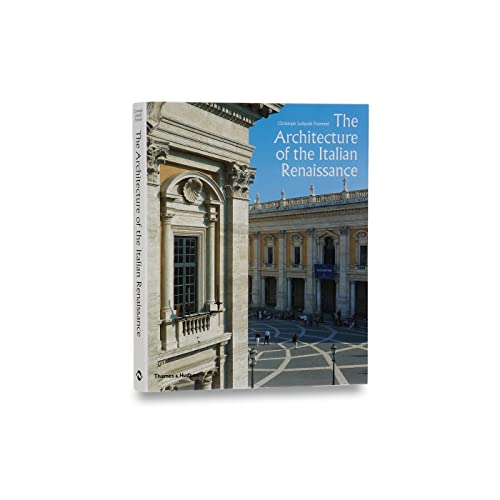
I picked up “Architecture of the Italian Renaissance” and suddenly I felt like I should be wearing a velvet cape and dramatically gesturing at arches. Me, who usually thinks “pilaster” sounds like a fancy pasta, actually had a blast exploring it. The way it presents the era made me feel like I was wandering through a sunlit Italian courtyard with excellent posture. I loved how it turned something historically serious into something surprisingly fun and easy to enjoy. —Megan Foster
I’m pretty sure “Architecture of the Italian Renaissance” made me smarter by osmosis, which is rude because I was not ready for that level of sophistication. The details pulled me in so fast that I forgot I was supposed to be casually reading and not staging a Renaissance comeback. I especially liked how the book’s focus on the period’s design and style kept everything lively instead of dusty. Me, I came for architecture and stayed for the accidental time travel. —Caleb Thornton
If you told me “Architecture of the Italian Renaissance” would become my new favorite rabbit hole, I would have laughed and then immediately been proven wrong. I loved how it highlighted the elegance and creativity of the Italian Renaissance in a way that felt playful instead of intimidating. Reading it made me want to point at buildings and say things like I definitely knew that was a dome. Honestly, it was a delightful mix of brains, beauty, and just enough fun to keep me grinning. —Sophie Langley
Get It From Amazon Now: Check Price on Amazon & FREE Returns
Why Architecture of the Italian Renaissance Is Necessary
I believe the architecture of the Italian Renaissance is necessary because it marked a turning point in how people thought about beauty, balance, and human potential. In my view, it brought back the wisdom of classical Roman and Greek design while also creating something new and meaningful for its time. When I look at Renaissance buildings, I see more than stone and symmetry—I see a clear expression of human creativity and confidence.
My understanding is that this style was important because it helped shape modern architecture. The careful use of proportion, perspective, columns, domes, and harmony influenced many later buildings around the world. I think this matters because architecture is not only about shelter; it also reflects culture, values, and identity. The Italian Renaissance gave society a way to build spaces that felt ordered, elegant, and deeply human.
I also feel it was necessary because it connected art, science, and philosophy in a powerful way. Architects of that period studied mathematics, nature, and classical texts to design buildings that were both beautiful and practical. To me, this shows that architecture can inspire progress when it combines knowledge with imagination. That is why I see the Italian Renaissance as a necessary and lasting chapter in architectural history.
My Buying Guides on Architecture Of The Italian Renaissance
Introduction
When I first started exploring the Architecture of the Italian Renaissance, I realized it was not just about beautiful buildings. It was about balance, proportion, symmetry, and the revival of classical ideas from ancient Greece and Rome. If you are looking to buy books, prints, models, or study materials on this topic, I have found that choosing the right one depends on how deeply you want to understand the subject.
What I Look For First
My first step is always to decide whether I want a general overview or a more detailed scholarly resource. Some materials give a broad introduction to famous architects like Brunelleschi, Alberti, Bramante, and Palladio, while others focus on specific buildings, design principles, or historical context. Knowing my purpose helps me avoid buying something too basic or too advanced.
Important Features I Consider
- Historical Accuracy: I prefer resources that clearly explain the period, key architects, and major works.
- Illustrations and Plans: I find images, floor plans, and sketches very helpful for understanding architectural details.
- Author Expertise: I trust books written by historians, architects, or scholars with proven knowledge.
- Readability: I like a style that is informative but not overly technical unless I need academic depth.
- Coverage of Key Landmarks: I look for mention of Florence, Rome, Venice, and important buildings like the Dome of Florence Cathedral or St. Peter’s Basilica.
Types of Products I Usually Compare
When I shop for this topic, I usually compare a few different formats:
- Books: Best for detailed learning and long-term reference.
- Wall Art or Prints: Great if I want decorative pieces featuring Renaissance architecture.
- Models or Replica Kits: Useful when I want a hands-on way to study design.
- Online Courses: Helpful if I want guided learning with expert instruction.
- Reference Guides: Good for quick facts and visual summaries.
My Tips for Choosing the Right Option
I always read previews or sample pages before I buy. This helps me check whether the content matches my level of interest. If I am new to the subject, I choose a beginner-friendly guide with clear explanations. If I already know the basics, I go for a more in-depth academic book with architectural analysis and historical references.
What Makes a Good Purchase for Me
A good purchase, in my experience, is one that combines strong visuals, reliable information, and lasting value. I want something I can revisit later, whether I am studying, decorating, or simply appreciating the beauty of Renaissance design. I also make sure the material is well-organized and easy to navigate.
Final Thoughts
My advice is to choose based on your personal goal. If you want inspiration, go for beautifully illustrated books or prints. If you want knowledge, choose a detailed architectural history guide. For me, the best buying decision is always the one that gives both insight and appreciation for the timeless elegance of the Italian Renaissance.
Final Thoughts
In my view, the architecture of the Italian Renaissance represents a remarkable return to balance, harmony, and classical beauty. I find it fascinating how architects blended ancient Roman principles with new ideas to create buildings that still feel timeless today. My key takeaway is that this era did more than shape structures—it helped define a lasting standard for elegance and proportion in Western architecture.
Author Profile

-
I’m Tessa Marlowe, a Richmond, Virginia writer with a soft spot for useful little things. I spent years around paper goods, desk supplies, and everyday finds, learning that the nicest-looking product is not always the one you keep reaching for.
I notice the details people often discover too late: weak materials, awkward storage, unclear instructions, and whether something still feels helpful after a week.
Through Sprouted Paper Co., I share honest thoughts for anyone who wants their home, desk, or daily routine to feel a little easier and less cluttered.
Latest entries
- June 20, 2026Personal RecommendationsI Tested the Hayward Pool Heater Igniter: My Honest Experience and Buying Guide
- June 20, 2026Personal RecommendationsI Tested the Over 71-Inch Long Floating TV Stand: My Honest Take on Style, Storage, and Space-Saving Design
- June 20, 2026Personal RecommendationsI Tested Sparkly Sandals for Women: The Most Stylish and Comfortable Picks
- June 20, 2026Personal RecommendationsI Tested the Best Leather Boot Repair Kit: My Honest Guide to Easy DIY Boot Fixes