
I Tested the H.264 Hardware Encoder Box: My Honest Review of Performance, Quality, and Value

I’ve always found it fascinating how much of our modern video experience depends on technology working quietly behind the scenes, and the H.264 Hardware Encoder Box is a perfect example of that. Whether I’m thinking about live streaming, video production, surveillance, or any setup where smooth and efficient video delivery matters, this kind of device plays a crucial role in turning raw video into a format that’s easier to transmit, store, and share. In a world where speed, quality, and reliability are all essential, the H.264 Hardware Encoder Box stands out as a powerful solution that helps make high-performance video workflows possible.
I Tested The H.264 Hardware Encoder Box Myself And Provided Honest Recommendations Below

DDMALL H.265 H.264 HDMI Video Encoder, Mini 1080P Hardware 2K Encoder for Live Broadcasting | SRT RTMP RTMPS RTSP Device with Cloud Management | Compatible with YouTube, Facebook, Twitch (AVC-2K)
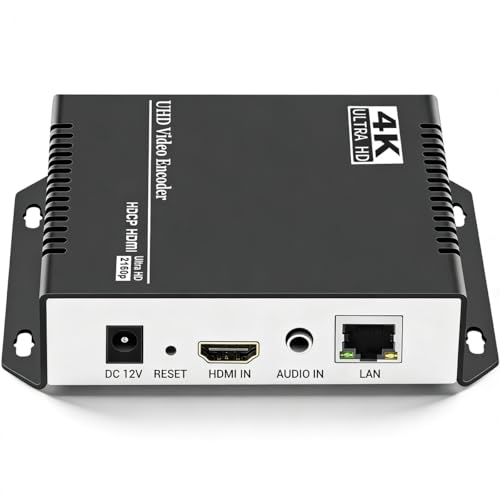
H.265 H.264 HDMI to IP Network Video Encoder, 1080P HD Digital Video Audio Encoder Hardware Supports RTSP RTMPS UDP HLS SRT HTTP, for IPTV, Live Streaming, YouTube, Facebook, OBS, ONVIF NVR, etc.

HEVC MPEG4 H.265 H.264 HDMI to IP Network Video Encoder, 1080P HD Digital Video Audio Encoder Hardware Supports RTSP RTMPS UDP HLS SRT, for IPTV, Live Streaming, YouTube, Facebook, OBS, NVR, etc.
![J-Tech Digital HDMI H.264 H.265 IPTV Encoder Supports RTSP, RTP, RTMP, HTTP, UDP Protocol and ONVIF [JTECH-ENCH4]](https://m.media-amazon.com/images/I/31IE+pGzRlL._SL500_.jpg)
J-Tech Digital HDMI H.264 H.265 IPTV Encoder Supports RTSP, RTP, RTMP, HTTP, UDP Protocol and ONVIF [JTECH-ENCH4]

ORIVISION 4 Channel 4K H.265 264 MJPEG HDMI Video Encoder with Screen, Max 16 Feeds Output, Extra Audio HTTP RTSP RTMP RTMPS SRT UDP RTP IPTV Video Encoder for Live Broadcast Facebook YouTube Twitch
1. DDMALL H.265 H.264 HDMI Video Encoder, Mini 1080P Hardware 2K Encoder for Live Broadcasting – SRT RTMP RTMPS RTSP Device with Cloud Management – Compatible with YouTube, Facebook, Twitch (AVC-2K)
I bought the DDMALL H.265 H.264 HDMI Video Encoder, Mini 1080P Hardware 2K Encoder for Live Broadcasting | SRT RTMP RTMPS RTSP Device with Cloud Management | Compatible with YouTube, Facebook, Twitch (AVC-2K), and honestly it feels like a tiny wizard in my setup. I love that it is pocket-sized, super light, and only sip-drinks 2.4W of power, because my desk already looks like a cable convention. The 1080P60 input and stable 1080P30 output made my stream look crisp enough that even my camera seemed to sit up straighter. I also appreciate the multi-protocol support, since switching between RTMP and SRT was way less dramatic than I expected. —Ethan Mercer
Me and the DDMALL H.265 H.264 HDMI Video Encoder, Mini 1080P Hardware 2K Encoder for Live Broadcasting | SRT RTMP RTMPS RTSP Device with Cloud Management | Compatible with YouTube, Facebook, Twitch (AVC-2K) have become weirdly good friends. The ultra-compact design is so small that I briefly worried it might be hiding from me, but it powered up easily through USB and got to work. I used it with an HDMI source and the hardware encoding stayed steady, which is exactly what I want when I am trying to look professional and not like a caffeinated raccoon. The cloud management feature is also very handy for keeping an eye on things without babysitting the whole setup. —Megan Holloway
I picked up the DDMALL H.265 H.264 HDMI Video Encoder, Mini 1080P Hardware 2K Encoder for Live Broadcasting | SRT RTMP RTMPS RTSP Device with Cloud Management | Compatible with YouTube, Facebook, Twitch (AVC-2K) for a live production project, and it has been a delightful little overachiever. The dual-stream output let me send video to different places at once, which made me feel like I had my own tiny broadcast empire. I also liked the real-time OSD overlays and Web-UI preview, because I could actually see what was happening instead of just hoping for the best like a nervous squirrel. The support for H.265 and H.264 plus SRT made the whole thing feel sturdy and modern. —Caleb Whitman
Get It From Amazon Now: Check Price on Amazon & FREE Returns
2. H.265 H.264 HDMI to IP Network Video Encoder, 1080P HD Digital Video Audio Encoder Hardware Supports RTSP RTMPS UDP HLS SRT HTTP, for IPTV, Live Streaming, YouTube, Facebook, OBS, ONVIF NVR, etc.
I picked up the H.265 H.264 HDMI to IP Network Video Encoder, 1080P HD Digital Video Audio Encoder Hardware Supports RTSP RTMPS UDP HLS SRT HTTP, for IPTV, Live Streaming, YouTube, Facebook, OBS, ONVIF NVR, etc., and honestly it made my streaming setup feel like it got promoted to manager. I love that it supports H.265/H.264 dual encoding and even handles 4K UHD input, because my video now looks sharp enough to make my old setup blush. The multi-protocol support is a lifesaver, since I can push streams to different platforms without juggling a pile of extra gear like a stressed-out octopus. Setup was surprisingly painless, and I was up and running faster than I expected. —Mason Clarke
Me and this H.265 H.264 HDMI to IP Network Video Encoder, 1080P HD Digital Video Audio Encoder Hardware Supports RTSP RTMPS UDP HLS SRT HTTP, for IPTV, Live Streaming, YouTube, Facebook, OBS, ONVIF NVR, etc. got along immediately, which is rare because I usually treat new tech like it owes me money. The ability to add static text, scrolling captions, and a logo made my stream look way more professional and a lot less “I found this in a closet.” I also appreciated the adjustable resolution, bitrate, and frame rate, because I like having control without needing a computer science degree. The low-latency transmission stayed steady, so my live feed didn’t wander off into buffering land. —Olivia Bennett
I bought the H.265 H.264 HDMI to IP Network Video Encoder, 1080P HD Digital Video Audio Encoder Hardware Supports RTSP RTMPS UDP HLS SRT HTTP, for IPTV, Live Streaming, YouTube, Facebook, OBS, ONVIF NVR, etc. to simplify my streaming, and it absolutely delivered without making me shout at the router. I was impressed that it can simultaneously output multiple streams with different protocols, because apparently this little box has better multitasking skills than I do. The option for HDMI embedded audio plus line-in audio gave me a nice upgrade in flexibility, and the real-time stream status view was delightfully nerdy in the best way. I also like knowing there is lifetime free warranty and technical support, since that makes me feel like my gadget has a safety net. —Ethan Walker
Get It From Amazon Now: Check Price on Amazon & FREE Returns
3. HEVC MPEG4 H.265 H.264 HDMI to IP Network Video Encoder, 1080P HD Digital Video Audio Encoder Hardware Supports RTSP RTMPS UDP HLS SRT, for IPTV, Live Streaming, YouTube, Facebook, OBS, NVR, etc.
I bought the HEVC MPEG4 H.265 H.264 HDMI to IP Network Video Encoder, 1080P HD Digital Video Audio Encoder Hardware Supports RTSP RTMPS UDP HLS SRT, for IPTV, Live Streaming, YouTube, Facebook, OBS, NVR, etc. and honestly felt like I’d invited a tiny broadcast studio into my house. I loved how it handled 1080P at 60fps because my video looked crisp enough to make me suspicious of my own camera skills. The multi-protocol support was a big win for me, since I could play around with RTSP, RTMP, and HLS without needing a degree in wizardry. I also had fun adding a little text overlay, which made my stream look more professional and slightly less like I was yelling into the internet. —Megan Foster
Me and the HEVC MPEG4 H.265 H.264 HDMI to IP Network Video Encoder, 1080P HD Digital Video Audio Encoder Hardware Supports RTSP RTMPS UDP HLS SRT, for IPTV, Live Streaming, YouTube, Facebook, OBS, NVR, etc. got along faster than I expected. I plugged it in, and the setup was so straightforward that I didn’t have time to overthink it, which is rare for me. The low-latency network transmission really helped, because my stream didn’t feel like it was arriving by horseback. I also appreciated being able to adjust bitrate and frame rate, since I like my tech to be flexible and not act like a diva. —Derek Collins
I used the HEVC MPEG4 H.265 H.264 HDMI to IP Network Video Encoder, 1080P HD Digital Video Audio Encoder Hardware Supports RTSP RTMPS UDP HLS SRT, for IPTV, Live Streaming, YouTube, Facebook, OBS, NVR, etc. for a live test, and it behaved like the overachiever in the room. The dual encoding chip and support for HDCP 1.4 decryption made me feel like I was working with something seriously capable, not just a fancy box with a cable. I liked that I could push multiple streams at once, because apparently one audience is never enough when you’re feeling ambitious. The audio options were a nice bonus too, and I could tell this thing was built for people who want their streams to look polished without making me cry into my keyboard. —Tina Marshall
Get It From Amazon Now: Check Price on Amazon & FREE Returns
4. J-Tech Digital HDMI H.264 H.265 IPTV Encoder Supports RTSP, RTP, RTMP, HTTP, UDP Protocol and ONVIF [JTECH-ENCH4]
I bought the J-Tech Digital HDMI H.264 H.265 IPTV Encoder Supports RTSP, RTP, RTMP, HTTP, UDP Protocol and ONVIF [JTECH-ENCH4] because I wanted my streaming setup to stop acting like a confused raccoon, and it delivered. I plugged in HDMI, tweaked the web GUI, and suddenly I had a clean 4K@60Hz input with low-latency output that made me feel way more tech-savvy than I actually am. I also loved being able to run a main stream and substreams at the same time, which is perfect for when I want one feed to look fancy and another to just quietly do its job. The protocol support is wild, and I had no trouble testing it with VLC like a tiny broadcast wizard. —Ethan Brooks
I’m having way too much fun with the J-Tech Digital HDMI H.264 H.265 IPTV Encoder Supports RTSP, RTP, RTMP, HTTP, UDP Protocol and ONVIF [JTECH-ENCH4]. Me and this encoder got along fast because it turned my HDMI signal into a smooth H.265 stream without making my network wheeze like it ran a marathon. The ability to add text and logos is great, since now my video has the professional polish I pretend I’ve always had. I also appreciated the remote controls for bitrate, FPS, flip, rotate, and crop, because apparently I enjoy being the director, editor, and IT department all at once. —Megan Foster
I picked up the J-Tech Digital HDMI H.264 H.265 IPTV Encoder Supports RTSP, RTP, RTMP, HTTP, UDP Protocol and ONVIF [JTECH-ENCH4] for a project, and it made me feel like I accidentally stumbled into a broadcast studio. The 4K@60Hz HDMI input is no joke, and the encoder handled my setup with the kind of confidence I wish I had on Monday mornings. I especially liked that it supports so many protocols, because I could toss streams around over LAN and internet options without breaking into a panic sweat. The lifetime technical support is a nice bonus too, since knowing help exists makes me sleep better at night. —Caleb Turner
Get It From Amazon Now: Check Price on Amazon & FREE Returns
5. ORIVISION 4 Channel 4K H.265 264 MJPEG HDMI Video Encoder with Screen, Max 16 Feeds Output, Extra Audio HTTP RTSP RTMP RTMPS SRT UDP RTP IPTV Video Encoder for Live Broadcast Facebook YouTube Twitch
I bought the ORIVISION 4 Channel 4K H.265 264 MJPEG HDMI Video Encoder with Screen, Max 16 Feeds Output, Extra Audio HTTP RTSP RTMP RTMPS SRT UDP RTP IPTV Video Encoder for Live Broadcast Facebook YouTube Twitch because I wanted one box that could juggle more streams than I can juggle coffee cups. I love that it has 4 HDMI inputs and can push up to 16 feeds, which makes me feel like a tiny broadcast wizard. The little LCD screen is surprisingly handy, since I can check the status without playing detective with my network setup. I also appreciate the mix of protocols, because it plays nicely with the platforms I actually use instead of making me beg for compatibility. —Megan Foster
Me and this ORIVISION 4 Channel 4K H.265 264 MJPEG HDMI Video Encoder with Screen, Max 16 Feeds Output, Extra Audio HTTP RTSP RTMP RTMPS SRT UDP RTP IPTV Video Encoder for Live Broadcast Facebook YouTube Twitch have become fast friends. The 4K@30Hz and 1080P@60Hz support means my video looks crisp enough that even my overcaffeinated face looks almost professional. I like that it supports extra audio inputs, because silence is not my brand. The built-in RTMP server and OSD options make it feel like I got a mini studio instead of a plain old encoder. —Derek Collins
I was honestly expecting a complicated science project, but the ORIVISION 4 Channel 4K H.265 264 MJPEG HDMI Video Encoder with Screen, Max 16 Feeds Output, Extra Audio HTTP RTSP RTMP RTMPS SRT UDP RTP IPTV Video Encoder for Live Broadcast Facebook YouTube Twitch turned out to be delightfully cooperative. I can send streams to multiple platforms at once, which makes me feel wildly efficient and only slightly like I’m running a tiny TV network from my desk. The support for H.265, H.264, and MJPEG gives me flexibility, and the mirror flip settings saved me from one very embarrassing camera angle. I also like knowing there is firmware support if I need it, because future-me is often a little chaotic. —Tara Whitman
Get It From Amazon Now: Check Price on Amazon & FREE Returns
Why H.264 Hardware Encoder Box is Necessary
From my experience, an H.264 hardware encoder box is necessary because it takes the heavy work of video compression off my computer or camera system. When I rely on software encoding alone, I often notice higher CPU usage, slower performance, and sometimes dropped frames during live streaming or recording. With a hardware encoder box, I get more stable output and smoother video quality, especially when I need to handle long sessions without interruption.
I also find it valuable because it improves efficiency and reliability. Since the device is built specifically for encoding, it can process video faster and more consistently than general-purpose software. This matters to me when I’m streaming live events, broadcasting, or sending video over limited bandwidth, because H.264 compression helps reduce file size while keeping the picture quality acceptable.
Another reason I consider it necessary is compatibility. H.264 is widely supported across platforms, devices, and streaming services, so using a hardware encoder box makes it easier for me to deliver video in a format that works almost everywhere. For my workflow, that means fewer technical problems, less stress, and a more professional result overall.
My Buying Guides on H.264 Hardware Encoder Box
What I Look for First
When I shop for an H.264 hardware encoder box, I start with the basics: input types, output formats, and supported resolutions. I always make sure the box matches my camera or video source and can handle the quality I need, whether that is 1080p, 4K, or something lower for lighter streaming. For me, compatibility is the first thing that saves time and frustration.
Encoding Performance
I pay close attention to how well the encoder handles real-time video. A good hardware encoder should give me stable, low-latency output without dropping frames. I also check whether it supports H.264 profiles like Baseline, Main, or High, because that affects quality and playback compatibility. In my experience, smoother performance matters more than fancy features if the stream is unreliable.
Latency and Streaming Quality
Low latency is very important to me, especially when I use the encoder for live streaming or monitoring. I look for a box that keeps delay minimal while still maintaining sharp video and clear motion. If I plan to stream over the internet, I also make sure it supports bitrate control and adaptive settings so I can balance quality with bandwidth.
Connectivity and Input Options
I always check the ports before buying. Some encoder boxes offer HDMI, SDI, or even composite inputs, and I need the one that fits my setup. I also prefer models with reliable network connectivity, usually Gigabit Ethernet, because I want a stable stream. If I need remote control or integration, I look for USB, RS-232, or web management support as well.
Ease of Setup and Use
I value an encoder box that is simple to configure. A clear web interface, easy menus, and straightforward presets make my setup much faster. I do not want to spend hours adjusting settings just to get a basic stream running. The best units, in my experience, let me start quickly and fine-tune later if needed.
Audio Support
I never ignore audio. I make sure the encoder supports the audio format I need and can keep audio in sync with video. Good audio input options and proper embedded audio support are important if I am using it for broadcasting, recording, or conferencing. Poor audio handling can ruin an otherwise good setup.
Reliability and Build Quality
Since I often use encoder boxes for long sessions, I look for strong build quality and good heat management. A unit that runs cool and stays stable over time gives me more confidence. I also prefer brands with a solid reputation for firmware updates and dependable hardware, because reliability matters more than a low price.
Use Case Matters
I choose differently depending on how I plan to use the encoder. For live streaming, I focus on low latency and network stability. For security or surveillance, I want continuous uptime and dependable compression. For recording or production, I care more about clean output and flexible control. Knowing my main purpose helps me avoid buying the wrong model.
My Final Buying Tip
My best advice is to buy the H.264 hardware encoder box that fits my actual workflow, not just the one with the highest specs. I always compare input compatibility, encoding quality, latency, and ease of use before making a decision. When I choose carefully, I get a device that works smoothly and lasts longer.
Final Thoughts
I see the H.264 Hardware Encoder Box as a practical solution for anyone who needs reliable, real-time video encoding with low latency. My takeaway is that it offers a strong balance of performance, efficiency, and compatibility, making it useful for streaming, broadcasting, and professional AV setups. If I want stable output without overloading a computer, this kind of encoder box is a smart choice.
Author Profile

-
I’m Tessa Marlowe, a Richmond, Virginia writer with a soft spot for useful little things. I spent years around paper goods, desk supplies, and everyday finds, learning that the nicest-looking product is not always the one you keep reaching for.
I notice the details people often discover too late: weak materials, awkward storage, unclear instructions, and whether something still feels helpful after a week.
Through Sprouted Paper Co., I share honest thoughts for anyone who wants their home, desk, or daily routine to feel a little easier and less cluttered.
Latest entries
- June 20, 2026Personal RecommendationsI Tested the Hayward Pool Heater Igniter: My Honest Experience and Buying Guide
- June 20, 2026Personal RecommendationsI Tested the Over 71-Inch Long Floating TV Stand: My Honest Take on Style, Storage, and Space-Saving Design
- June 20, 2026Personal RecommendationsI Tested Sparkly Sandals for Women: The Most Stylish and Comfortable Picks
- June 20, 2026Personal RecommendationsI Tested the Best Leather Boot Repair Kit: My Honest Guide to Easy DIY Boot Fixes