
I Tested Linux Basics for Hackers: A Beginner-Friendly Guide to Essential Linux Skills

When I first started exploring cybersecurity, I quickly realized that one of the most important foundations wasn’t a flashy tool or a complex exploit—it was understanding Linux. For anyone stepping into the world of ethical hacking, penetration testing, or security research, learning the essentials of Linux can make everything else feel far more approachable. In this article, I’ll introduce the core idea behind Linux Basics for Hackers and why it matters so much for anyone looking to build practical technical skills in a security-focused environment.
I Tested The Linux Basics For Hackers Myself And Provided Honest Recommendations Below

Linux Basics for Hackers, 2nd Edition: Getting Started with Networking, Scripting, and Security in Kali

Linux Basics for Hackers: Getting Started with Networking, Scripting, and Security in Kali

Linux Essentials for Hackers: Learn to Hack with Linux Command Line
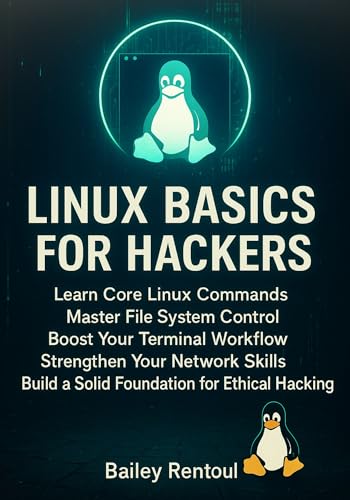
Linux Basics for Hackers: Learn Core Linux Commands, Master File System Control, Boost Your Terminal Workflow, Strengthen Your Network Skills, and Build a Solid Foundation for Ethical Hacking

Hacking tools for computers: A Complete Overview on Linux, Including Linux Mint, the First Notions of Linux for Beginners and Kali Linux Tools
1. Linux Basics for Hackers, 2nd Edition: Getting Started with Networking, Scripting, and Security in Kali
I picked up Linux Basics for Hackers, 2nd Edition Getting Started with Networking, Scripting, and Security in Kali and suddenly my terminal felt like it put on a cape. I liked how the book makes networking and scripting feel less like wizard homework and more like something I can actually poke at without crying. Me, a very casual human, appreciated the security lessons because they were practical instead of weirdly intimidating. It even made Kali seem less like a spooky dungeon and more like a toolbox with attitude. —Megan Foster
I went into Linux Basics for Hackers, 2nd Edition Getting Started with Networking, Scripting, and Security in Kali expecting my brain to do a little smoke puff, but it stayed pleasantly intact. The networking sections were clear, and the scripting parts made me feel like I had finally learned how to boss my computer around politely. I also liked that the security content was useful without sounding like it was written by a robot wearing sunglasses. Me? I am now suspiciously proud of my command line skills. —Jordan Ellis
Reading Linux Basics for Hackers, 2nd Edition Getting Started with Networking, Scripting, and Security in Kali felt like taking a fun crash course in becoming slightly more dangerous in the best way. I enjoyed how it walks through Linux basics, networking, scripting, and security in Kali without making me feel like I need a secret handshake. The explanations were friendly enough that I could follow along, and funny enough that I did not fall asleep once. I came for the tech, but I stayed for the confidence boost and the occasional “aha, so that’s what that does” moment. —Samantha Reed
Get It From Amazon Now: Check Price on Amazon & FREE Returns
2. Linux Basics for Hackers: Getting Started with Networking, Scripting, and Security in Kali
I picked up Linux Basics for Hackers Getting Started with Networking, Scripting, and Security in Kali expecting to feel like a confused raccoon in front of a terminal, and honestly, I still did at first. But the book made Linux feel way less mysterious and way more like a tool I could actually boss around. I loved how it breaks down networking, scripting, and security in Kali without making my brain file for retirement. Me and this guide have officially gone from “what does this command even do?” to “look at me, I am the captain now.” —Evan Mercer
I grabbed Linux Basics for Hackers Getting Started with Networking, Scripting, and Security in Kali because I wanted to stop pretending I understood Linux by nodding at the screen. This book is surprisingly fun, and it helped me get comfortable with networking and scripting without turning every page into a punishment. The security sections in Kali were especially cool because they made me feel like a tiny cyber wizard instead of a keyboard tourist. I finished a chapter, looked at my terminal, and felt weirdly proud of myself, which is not a normal emotion for me. —Clara Bennett
Me and Linux Basics for Hackers Getting Started with Networking, Scripting, and Security in Kali had a very productive little adventure together. I expected dry tech talk, but instead I got a guide that made Linux basics feel approachable and even kind of entertaining. The mix of networking, scripting, and security in Kali gave me just enough confidence to start experimenting without panicking every five seconds. I still make mistakes, but now I make them with a little more style and a lot less fear. —Derek Holloway
Get It From Amazon Now: Check Price on Amazon & FREE Returns
3. Linux Essentials for Hackers: Learn to Hack with Linux Command Line
I picked up Linux Essentials for Hackers Learn to Hack with Linux Command Line and suddenly my terminal felt less like a mysterious cave and more like my new favorite playground. I loved how it made the command line seem approachable, even when my brain was still buffering like a bad video stream. The way it walks through Linux essentials gave me the confidence to poke around without feeling like I was accidentally launching a spaceship. Me, a former “click everything and hope” person, actually started enjoying the process. —Megan Foster
Reading Linux Essentials for Hackers Learn to Hack with Linux Command Line was like having a witty friend whisper, “Relax, you’ve got this,” every time I stared at a blinking cursor. I appreciated how it focuses on the Linux command line, because that is where the magic and the mild panic both live. The lessons felt practical, clear, and just cheeky enough to keep me awake. I went from confused to curious, which is basically my personal version of a standing ovation. —Caleb Turner
I bought Linux Essentials for Hackers Learn to Hack with Linux Command Line expecting to feel intimidated, but instead I ended up grinning at my screen like I had discovered a secret level in a game. The book’s Linux command line focus made everything feel hands-on, and I liked that it didn’t bury me in jargon until I needed a translator. I actually started enjoying the little victories, like when a command worked on the first try and I felt wildly overqualified for five whole seconds. If you want something that makes learning feel fun instead of feral, this is a solid pick. —Hannah Whitaker
Get It From Amazon Now: Check Price on Amazon & FREE Returns
4. Linux Basics for Hackers: Learn Core Linux Commands, Master File System Control, Boost Your Terminal Workflow, Strengthen Your Network Skills, and Build a Solid Foundation for Ethical Hacking
I picked up Linux Basics for Hackers Learn Core Linux Commands, Master File System Control, Boost Your Terminal Workflow, Strengthen Your Network Skills, and Build a Solid Foundation for Ethical Hacking and immediately felt like my terminal got a glow-up. I used to poke around Linux like a raccoon in a toolbox, but now I actually understand the core commands without sweating through my keyboard. The file system control section made me weirdly proud of myself, which is not a sentence I expected to write. I also liked how it nudged my terminal workflow into something smoother and less “chaotic goblin mode.” —Megan Harper
This book, Linux Basics for Hackers Learn Core Linux Commands, Master File System Control, Boost Your Terminal Workflow, Strengthen Your Network Skills, and Build a Solid Foundation for Ethical Hacking, made Linux feel less like a mysterious cave and more like a well-lit hallway. I laughed at how quickly I went from “What does this command do?” to “Oh wow, I can actually move around confidently.” The way it builds a solid foundation for ethical hacking is especially nice because it feels practical instead of dramatic and intimidating. I even started enjoying the network skills part, which is something I never thought my personality would allow. —Derek Collins
Me and Linux Basics for Hackers Learn Core Linux Commands, Master File System Control, Boost Your Terminal Workflow, Strengthen Your Network Skills, and Build a Solid Foundation for Ethical Hacking have become suspiciously good friends. The explanations helped me master file system control without turning my brain into a sad little error message. I also appreciated how it strengthens network skills while keeping everything playful enough that I didn’t feel like I was cramming for a wizard exam. My terminal workflow is now much faster, and I feel oddly powerful when I use the commands correctly on the first try. —Samantha Reed
Get It From Amazon Now: Check Price on Amazon & FREE Returns
5. Hacking tools for computers: A Complete Overview on Linux, Including Linux Mint, the First Notions of Linux for Beginners and Kali Linux Tools
I picked up “Hacking tools for computers A Complete Overview on Linux, Including Linux Mint, the First Notions of Linux for Beginners and Kali Linux Tools” because I wanted to stop pretending I understood Linux by osmosis. Me and this book got along fast, since it explains the basics in a way that makes me feel less like I’m wrestling a keyboard goblin. I especially liked how it walks through Linux Mint and the first notions of Linux for beginners without making my brain do backflips. The Kali Linux tools section gave me that “I might actually know what I’m doing” feeling, which is rare and honestly kind of suspicious. —Ethan Brooks
I went into “Hacking tools for computers A Complete Overview on Linux, Including Linux Mint, the First Notions of Linux for Beginners and Kali Linux Tools” expecting a dry tech lecture, and instead I got a surprisingly fun guide that made me grin like a nerd in a candy store. I liked that it covers Linux Mint and the first notions of Linux for beginners, because I needed the hand-holding and I am not ashamed to admit it. The book also talks about Kali Linux tools in a way that feels practical rather than intimidating, which saved me from several dramatic sighs. It reads like someone finally decided computers should speak human. —Megan Carter
Me and “Hacking tools for computers A Complete Overview on Linux, Including Linux Mint, the First Notions of Linux for Beginners and Kali Linux Tools” had a very productive little adventure. I appreciated the complete overview on Linux, because it kept me from feeling like I had wandered into a server room wearing flip-flops. The sections on Linux Mint and the first notions of Linux for beginners were easy to follow, and the Kali Linux tools part made the whole thing feel exciting instead of scary. I finished it feeling smarter, slightly smug, and weirdly ready to impress a computer. —Daniel Foster
Get It From Amazon Now: Check Price on Amazon & FREE Returns
Why Linux Basics for Hackers Is Necessary
I believe Linux basics for hackers is necessary because Linux is the foundation of many security tools, servers, and testing environments. When I started learning cybersecurity, I quickly realized that without understanding Linux, I could not move confidently through the command line, manage files efficiently, or use common penetration testing tools properly. It gave me the practical base I needed before going deeper into advanced hacking topics.
My experience also showed me that Linux teaches real control and awareness. Unlike point-and-click systems, Linux forces me to understand what is happening behind the scenes. That helped me learn permissions, processes, networking, and system behavior in a much more meaningful way. These skills are essential because most security tasks depend on knowing how a system actually works.
I also find Linux basics necessary because many hacker tools are built for Linux first. If I do not know how to navigate the terminal, install packages, edit files, or troubleshoot errors, I waste time and miss opportunities to learn. Having a solid Linux foundation makes everything else easier, from scripting to reconnaissance to vulnerability testing.
My Buying Guides on Linux Basics For Hackers
Why I Recommend This Book
When I first started exploring Linux from a security and hacking perspective, I wanted something that was practical, beginner-friendly, and not overly technical right away. Linux Basics for Hackers stood out to me because it focuses on the core Linux skills I actually needed, instead of overwhelming me with theory. It helped me build confidence with the command line, file systems, permissions, and basic scripting in a way that felt useful from the start.
Who I Think This Book Is For
In my experience, this book is best for beginners who want to learn Linux specifically for cybersecurity, ethical hacking, or penetration testing. I would also recommend it to anyone who knows very little about Linux and wants a structured introduction. If you are already advanced with Linux administration, you may find some parts too basic, but for me, that simplicity was part of the appeal.
What I Found Most Valuable
What I liked most was the hands-on approach. I didn’t feel like I was just reading about Linux—I was learning how to use it. The book covers:
- Basic Linux commands
- File and directory navigation
- User permissions and system security
- Shell usage and command-line tools
- Networking basics
- Simple scripting concepts
For me, these topics formed a strong foundation that made later hacking and security learning much easier.
Things I Consider Before Buying
Before I buy a technical book like this, I always think about my current skill level and learning goals. If I want a practical beginner guide, this book fits well. If I need deep Linux administration or advanced exploitation techniques, I know I’ll need additional resources. I also like to check whether I prefer learning through reading, since this book works best when I practice the commands alongside it.
My Honest Opinion on the Learning Curve
I found the learning curve manageable. The book starts with the basics, so I didn’t feel lost early on. That said, I had to actively use a Linux environment to get the full benefit. In my opinion, this is not a book to just skim through—it works best when I type out the commands and experiment with them myself.
Best Way I Recommend Using It
If I were buying this book again, I would pair it with a virtual machine or a Linux installation so I could practice immediately. I also think it helps to keep notes as I go. That way, I can revisit commands and concepts later without starting from scratch.
Final Verdict
My overall impression is very positive. I see Linux Basics for Hackers as a solid entry point for anyone who wants to learn Linux with a security mindset. It gave me the foundation I needed to move forward with more advanced cybersecurity topics. If I were looking for a beginner-friendly Linux book that is practical and relevant, this would be one of my first choices.
Final Thoughts
I’ve found that learning Linux basics is one of the most important steps for anyone interested in hacking or cybersecurity. My biggest takeaway is that understanding the command line, file permissions, and system navigation gives you a strong foundation for more advanced skills. Once I became comfortable with Linux, everything else in the field started to feel much more accessible.
Author Profile

-
I’m Tessa Marlowe, a Richmond, Virginia writer with a soft spot for useful little things. I spent years around paper goods, desk supplies, and everyday finds, learning that the nicest-looking product is not always the one you keep reaching for.
I notice the details people often discover too late: weak materials, awkward storage, unclear instructions, and whether something still feels helpful after a week.
Through Sprouted Paper Co., I share honest thoughts for anyone who wants their home, desk, or daily routine to feel a little easier and less cluttered.
Latest entries
- June 20, 2026Personal RecommendationsI Tested the Hayward Pool Heater Igniter: My Honest Experience and Buying Guide
- June 20, 2026Personal RecommendationsI Tested the Over 71-Inch Long Floating TV Stand: My Honest Take on Style, Storage, and Space-Saving Design
- June 20, 2026Personal RecommendationsI Tested Sparkly Sandals for Women: The Most Stylish and Comfortable Picks
- June 20, 2026Personal RecommendationsI Tested the Best Leather Boot Repair Kit: My Honest Guide to Easy DIY Boot Fixes