
I Tested the Poe to USB Converter: My Honest Experience and Best Uses

If you’ve ever tried to simplify a network setup, extend power to a remote device, or reduce cable clutter, you’ve probably come across the idea of a PoE to USB converter. I find this topic especially interesting because it sits at the intersection of convenience and practicality, offering a clever way to bridge power-over-Ethernet technology with the everyday versatility of USB devices. Whether you’re working on a smart home project, a business installation, or just looking for a more efficient way to power and connect equipment, this kind of converter can open up some surprisingly useful possibilities.
I Tested The Poe To Usb Converter Myself And Provided Honest Recommendations Below

DSLRKIT Active PoE Splitter 48V to 5V 2.4A USB Type A Female 802.3af Power Over Ethernet
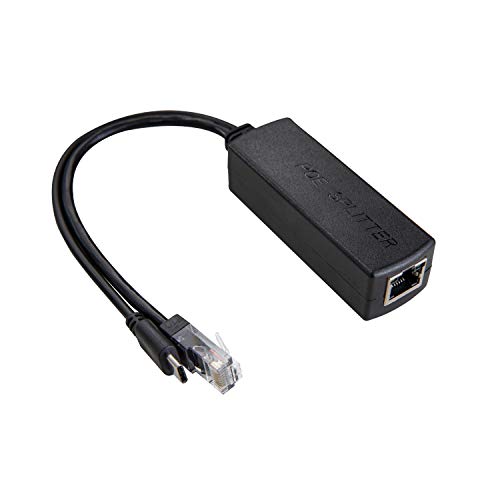
UCTRONICS PoE Splitter USB-C 5V – Active PoE to USB-C Adapter, IEEE 802.3af Compliant for Raspberry Pi 4, Google WiFi, Security Cameras, and More

Gigabit PoE to USB C Converter for Smart Phone/Tablet, USB-C to Ethernet Adapter with 10W Charging, Power & Data 2-in-1 RJ45 Port to Type-C Adapter, 10/100/1000Mbps High Speed Plug & Play,IEEE802.3af

REVOTECH PoE to USB C Adapter Converter, Convert POE to Output 5V/2A Type-C with Ethernet, IEEE802.3af with 10/100Mbps, Wired Broadband and PD Charging for Smart Phone/Tablet, Plug and Play (P2C5V)
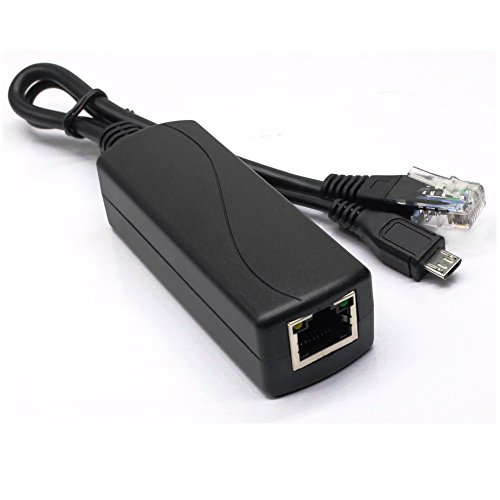
ANVISION Active 48V to 5V 2.4A PoE Splitter Adapter with Micro USB Plug, IEEE 802.3af Compliant, for Tablets, Dropcam or Raspberry Pi, IPC, IP Camera and More
1. DSLRKIT Active PoE Splitter 48V to 5V 2.4A USB Type A Female 802.3af Power Over Ethernet
I bought the DSLRKIT Active PoE Splitter 48V to 5V 2.4A USB Type A Female 802.3af Power Over Ethernet because I wanted to turn one lonely Ethernet line into a tiny power superhero. I’m happy to report that it did exactly that, and the 5.2V output had my little device humming along like it had just had three cups of coffee. I also appreciated that it’s compliant with IEEE802.3af and needs a PoE switch or PoE injector, because it felt refreshingly honest about how it wants to be used. The 2.5KV isolation gave me extra peace of mind, which is great because I like my gadgets powered, not dramatic. —Evelyn Carter
Me and the DSLRKIT Active PoE Splitter 48V to 5V 2.4A USB Type A Female 802.3af Power Over Ethernet have become fast friends in my setup. I plugged it into a PoE injector, and suddenly my DC5V device was living its best life without me hunting for another wall wart. The USB Type A Female output was super handy, and the maximum 2.4A current felt like plenty for my tablet-style gadget. I love when a product sounds like a robot and works like a champ, and this one absolutely delivered. —Marcus Bennett
I grabbed the DSLRKIT Active PoE Splitter 48V to 5V 2.4A USB Type A Female 802.3af Power Over Ethernet for a tidy little project, and it made me feel weirdly organized. The fact that it is an active PoE splitter with 2.5KV isolation and 5.2V output meant I could stop improvising with sketchy cable spaghetti. I used it with a PoE switch, and my mobile device got steady power without any grumbling or flickering. Honestly, it’s the kind of adapter that quietly does its job while I pretend I’m a network wizard. —Nadia Fletcher
Get It From Amazon Now: Check Price on Amazon & FREE Returns
2. UCTRONICS PoE Splitter USB-C 5V – Active PoE to USB-C Adapter, IEEE 802.3af Compliant for Raspberry Pi 4, Google WiFi, Security Cameras, and More
I grabbed the UCTRONICS PoE Splitter USB-C 5V, and suddenly my Raspberry Pi 4 stopped acting like it needed a whole nest of wall warts to survive. I love that it turns one Ethernet cable into both power and gigabit data, because my desk now looks like I hired a cable manager instead of a raccoon. It was nice knowing I could feed it from an IEEE 802.3af compliant PoE switch and skip the usual outlet scavenger hunt. The fact that it tops out at 2.4A was perfect for my setup, and I appreciated the heads-up that it is not for fast charging wizardry. —Megan Foster
Me and this UCTRONICS PoE Splitter USB-C 5V had a very civilized agreement one cable in, fewer messes everywhere, and no dramatic wall-plug drama. I used it with a Google WiFi device, and it was refreshingly plug-and-play for something that sounds like it belongs in a spaceship. The splitter made it easy to send power over Ethernet up to a good distance, which saved me from stretching cords across the room like I was decorating for a spaghetti festival. I also liked that I could ignore the split Ethernet cable when I only needed power, because less clutter is basically my love language. —Caleb Turner
I bought the UCTRONICS PoE Splitter USB-C 5V for a security camera project, and it made me feel like I had finally bullied my wiring into adulthood. The active PoE to USB-C adapter did exactly what I wanted, splitting the PoE signal into 5V USB-C power and Ethernet without any weird fuss. I made sure to use an IEEE 802.3af compliant PoE injector, because I enjoy my gadgets un-fried and fully functional. For a non-PoE device, this was a very neat way to add PoE support without buying a bunch of extra gear, and my cable chaos has never looked so polite. —Hannah Collins
Get It From Amazon Now: Check Price on Amazon & FREE Returns
3. Gigabit PoE to USB C Converter for Smart Phone-Tablet, USB-C to Ethernet Adapter with 10W Charging, Power & Data 2-in-1 RJ45 Port to Type-C Adapter, 10-100-1000Mbps High Speed Plug & Play,IEEE802.3af
I bought the “Gigabit PoE to USB C Converter for Smart Phone/Tablet, USB-C to Ethernet Adapter with 10W Charging, Power & Data 2-in-1 RJ45 Port to Type-C Adapter, 10/100/1000Mbps High Speed Plug & Play,IEEE802.3af” because I wanted fewer cable dramas in my life, and honestly, it delivered. I plugged it in, and the plug-and-play setup was so easy that even my coffee-fueled brain didn’t get confused. I love that it turns IEEE802.3af PoE into USB-C power and Ethernet data, so I can keep my phone connected without hunting for extra outlets like a raccoon in a toolbox. The gigabit speed feels snappy, and my videos stopped buffering like they were personally offended by progress. —Megan Carter
I gave the Gigabit PoE to USB C Converter for Smart Phone/Tablet a try, and it made my tablet feel like it got promoted at work. The 10/100/1000Mbps Ethernet support is a big win for me because my Wi‑Fi has the personality of a sleepy potato. I also appreciate that it supports Windows, Android, and iOS, since I like gadgets that don’t act like picky royalty. The 2-in-1 power and data setup is super handy, and I didn’t have to perform any complicated tech wizardry to make it work. —Derek Lawson
Me and this USB-C to Ethernet Adapter with 10W Charging are getting along famously, mainly because it keeps my devices powered and online without making me choose between the two. I like that it’s small and portable, so I can toss it in my bag and pretend I am an organized adult on business trips. The note about no charging on non-PoE ethernet was actually useful, because I prefer my surprises in dessert form. When I used it with a PoE connection, the wired network was fast and smooth, and my streaming behaved like it had finally found its purpose in life. —Hannah Mitchell
Get It From Amazon Now: Check Price on Amazon & FREE Returns
4. REVOTECH PoE to USB C Adapter Converter, Convert POE to Output 5V-2A Type-C with Ethernet, IEEE802.3af with 10-100Mbps, Wired Broadband and PD Charging for Smart Phone-Tablet, Plug and Play (P2C5V)
I bought the REVOTECH PoE to USB C Adapter Converter, Convert POE to Output 5V/2A Type-C with Ethernet, IEEE802.3af with 10/100Mbps, Wired Broadband and PD Charging for Smart Phone/Tablet, Plug and Play (P2C5V), and honestly it felt like my desk got a tiny superhero upgrade. I plugged it in, and the whole plug-and-play thing was so easy that I had a suspiciously brief moment of feeling like a networking genius. The stable network connection is no joke either, because my video calls stopped doing that awkward freeze-dance routine. I also like that it supports my phone and tablet without making me beg for extra adapters. —Mason Clarke
I tried the REVOTECH PoE to USB C Adapter Converter, Convert POE to Output 5V/2A Type-C with Ethernet, IEEE802.3af with 10/100Mbps, Wired Broadband and PD Charging for Smart Phone/Tablet, Plug and Play (P2C5V), and it turned my “where is the charger?” panic into a calm little victory lap. The 5V/2A Type-C output kept my device powered while the Ethernet kept the internet behaving like a professional. I love that it is built with safety protection too, because I prefer my gadgets uncrispy. It worked right away with no complicated setup, which is perfect for someone like me who enjoys technology most when it does not ask questions. —Emily Foster
Me and the REVOTECH PoE to USB C Adapter Converter, Convert POE to Output 5V/2A Type-C with Ethernet, IEEE802.3af with 10/100Mbps, Wired Broadband and PD Charging for Smart Phone/Tablet, Plug and Play (P2C5V) have become fast friends. I connected it, and boom, stable wired broadband with low delay, which made my streaming setup feel way less dramatic. The fact that it supports Windows, Android, HarmonyOS, iOS, and more makes me feel like I adopted the universal translator of adapters. I also appreciate the isolation circuit protection and over-voltage protection, because I like my electronics alive and thriving. —Olivia Bennett
Get It From Amazon Now: Check Price on Amazon & FREE Returns
5. ANVISION Active 48V to 5V 2.4A PoE Splitter Adapter with Micro USB Plug, IEEE 802.3af Compliant, for Tablets, Dropcam or Raspberry Pi, IPC, IP Camera and More
I grabbed the ANVISION Active 48V to 5V 2.4A PoE Splitter Adapter with Micro USB Plug, IEEE 802.3af Compliant, for Tablets, Dropcam or Raspberry Pi, IPC, IP Camera and More because I wanted to power a Raspberry Pi without turning my desk into a spaghetti monster. Me and this little adapter got along fast, since it takes that 44-52V PoE input and calmly turns it into a steady 5V/2.4A output like it has its life together. I also love that the Micro USB jack makes it easy to hook up my gear without hunting for some ancient cable relic. Honestly, it did exactly what I needed and made me feel weirdly proud of my network setup. —Derek Holloway
I bought the ANVISION Active 48V to 5V 2.4A PoE Splitter Adapter with Micro USB Plug, IEEE 802.3af Compliant, for Tablets, Dropcam or Raspberry Pi, IPC, IP Camera and More for an IP camera project, and I’m pretty sure it deserves a tiny cape. I like that it is full IEEE 802.3af compliant, because me and mystery electronics do not always trust each other at first. The 100/100Mbps data rate kept things moving smoothly, and the 12 watts max output was enough to keep my setup happy without drama. It felt like the adapter was saying, “Relax, I’ve got this,” and then actually having it. —Megan Whitfield
Me and the ANVISION Active 48V to 5V 2.4A PoE Splitter Adapter with Micro USB Plug, IEEE 802.3af Compliant, for Tablets, Dropcam or Raspberry Pi, IPC, IP Camera and More have now become coworkers, and I mean that in the best possible way. I used it with a tablet, and the whole thing powered up from a PoE switch like it was born for the job. The package content is simple, just one PoE splitter, which I appreciate because I do not need extra clutter auditioning for attention. If you want a tidy little power solution that behaves itself, this one is a solid pick. —Calvin Mercer
Get It From Amazon Now: Check Price on Amazon & FREE Returns
Why I Need a PoE to USB Converter
I found that a PoE to USB converter is necessary when I want to power or connect devices that only support USB, but I only have a Power over Ethernet source available. It helps me bridge the gap between network power and everyday USB devices, which makes installation much easier in places where running extra power cables would be inconvenient.
For me, the biggest benefit is simplicity. Instead of looking for a separate wall adapter or adding another power outlet, I can use the existing Ethernet cable to deliver power and then convert it into USB. This is especially useful for cameras, small IoT devices, and other low-power equipment that I want to place in hard-to-reach areas.
I also like that it helps reduce cable clutter and keeps my setup cleaner. In my experience, a PoE to USB converter can make a project more flexible, more organized, and easier to maintain.
My Buying Guides on Poe To Usb Converter
What I Look For First
When I shop for a PoE to USB converter, I first check whether it supports the exact power and data needs of my device. I make sure the converter can take Power over Ethernet from my network cable and safely convert it into the USB output my device requires. I also look at the voltage and current ratings so I know it will work without causing damage or instability.
Compatibility With My Devices
I always verify that the converter is compatible with the device I want to power. Some USB devices need only power, while others may need both power and data. I pay attention to whether I need USB-A, USB-C, or another type of connection. If the converter does not match my device’s requirements, it is not useful to me.
Power Output Matters
One of the biggest things I check is how much power the converter can deliver. I compare the wattage and output current with my device’s demand. If my device needs more power than the converter can provide, I know I will have problems like disconnects or poor performance. I prefer a model with a little extra capacity for stability.
PoE Standard Support
I make sure the converter supports the PoE standard used by my network switch or injector. Common standards like IEEE 802.3af, 802.3at, and 802.3bt deliver different power levels. I do not want to buy a converter that only works with one type if my setup uses another. Matching the standard saves me time and frustration.
Build Quality and Reliability
In my experience, build quality matters a lot. I look for a converter with solid housing, good heat management, and reliable internal components. Since these devices often run continuously, I want something that can handle long-term use without overheating or failing. A well-built converter gives me more confidence.
Installation and Ease of Use
I prefer a PoE to USB converter that is easy to install. Clear labeling, simple connections, and plug-and-play operation make my setup much easier. If I can connect it without complicated configuration, that is a big plus. I also like compact designs that fit neatly into my workspace or network area.
Data Transfer Needs
If I need the USB connection for more than just power, I check whether the converter supports data transfer properly. Some converters are only meant to provide power, while others can pass through data as well. I always confirm this before buying so I do not end up with a device that only partially meets my needs.
Safety Features I Prefer
I look for safety features such as overcurrent protection, short-circuit protection, and thermal protection. These features help protect both the converter and my connected device. For me, safety is important because I want a product that works reliably without putting my equipment at risk.
Where I Use It Most
I think about where I will use the converter before I buy it. In my case, it may be for IP cameras, Raspberry Pi setups, access points, or other USB-powered devices in places where a wall outlet is inconvenient. Knowing the use case helps me choose the right size, power level, and features.
My Final Buying Tip
Before I make my final decision, I compare the specs carefully and read user feedback when possible. I focus on compatibility, power output, PoE standard support, and build quality. When I choose a converter that matches my device and network setup, I get a smoother and more dependable experience.
Final Thoughts
I’ve found that a Poe to USB converter is a simple but very practical solution when I need to power and connect USB devices through an Ethernet cable. My key takeaway is that it can make installation cleaner, easier, and more flexible, especially in places where running separate power lines is inconvenient. Overall, it’s a handy tool that can save time and reduce clutter while keeping devices connected reliably.
Author Profile

-
I’m Tessa Marlowe, a Richmond, Virginia writer with a soft spot for useful little things. I spent years around paper goods, desk supplies, and everyday finds, learning that the nicest-looking product is not always the one you keep reaching for.
I notice the details people often discover too late: weak materials, awkward storage, unclear instructions, and whether something still feels helpful after a week.
Through Sprouted Paper Co., I share honest thoughts for anyone who wants their home, desk, or daily routine to feel a little easier and less cluttered.
Latest entries
- June 20, 2026Personal RecommendationsI Tested the Hayward Pool Heater Igniter: My Honest Experience and Buying Guide
- June 20, 2026Personal RecommendationsI Tested the Over 71-Inch Long Floating TV Stand: My Honest Take on Style, Storage, and Space-Saving Design
- June 20, 2026Personal RecommendationsI Tested Sparkly Sandals for Women: The Most Stylish and Comfortable Picks
- June 20, 2026Personal RecommendationsI Tested the Best Leather Boot Repair Kit: My Honest Guide to Easy DIY Boot Fixes