
I Tested USB 2.0 Header to USB Adapters: My Honest Experience and Best Picks

When I first started looking into USB 2.0 Header to USB connections, I realized how often this small but important component gets overlooked. It may not sound exciting at first, but it plays a key role in helping internal motherboard headers connect to usable USB ports, making it easier to expand or customize a system. Whether I’m dealing with a desktop build, a case upgrade, or just trying to make better use of available hardware, this topic quickly becomes more relevant than I expected.
I Tested The Usb 2.0 Header To Usb Myself And Provided Honest Recommendations Below

YARCHONN USB 2.0 to 9Pin Motherboard Header Adapter Cable USB Type A Male to 9 Pin Male Motherboard Data Cable Converter Extension Cord -20cm-2pcs

9-Pin USB Motherboard Male Header to Single USB 2.0 Type A Male Cable 7.8inch
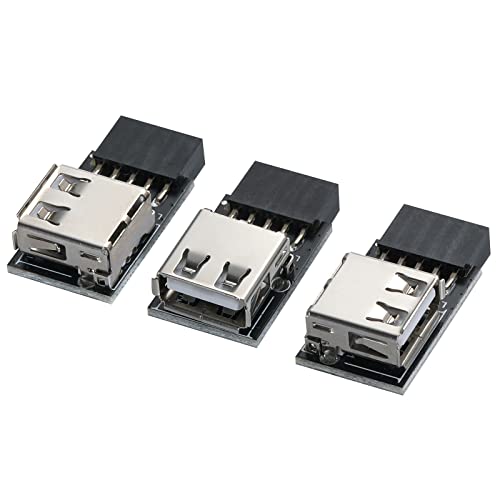
MZHOU USB 2.0 9Pin/10Pin Front Panel Header USB 9pin to Type A Adapter
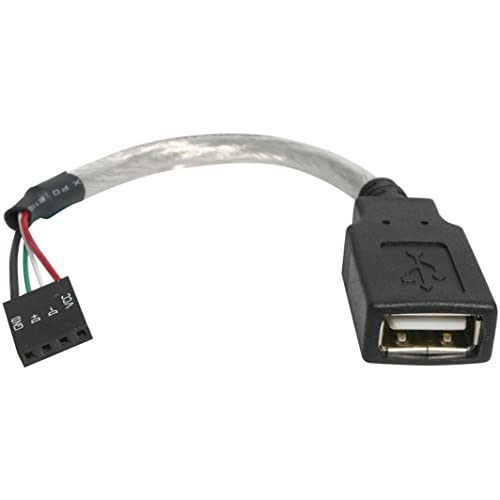
StarTech USB A to USB Motherboard 4-Pin Header F/F 2.0 Cable, 6″ (USBMBADAPT)

Qulkws 2 Pcs USB Header to-USB Port USB 2.0 Female-to Motherboard 9 Pin Header Adapter Cable 3.9” Type A Port to 5 Pin Female Mainboard Data Cable
1. YARCHONN USB 2.0 to 9Pin Motherboard Header Adapter Cable USB Type A Male to 9 Pin Male Motherboard Data Cable Converter Extension Cord -20cm-2pcs
I bought the YARCHONN USB 2.0 to 9Pin Motherboard Header Adapter Cable USB Type A Male to 9 Pin Male Motherboard Data Cable Converter Extension Cord -20cm-2pcs because my PC case was acting like it had a secret USB shortage crisis. I plugged it in, and suddenly my stubborn motherboard header situation felt much less dramatic. I like that it works as a USB 2.0 to 9Pin Header cable and supports both USB 2.0 and USB 1.1, so I did not have to perform any tech wizardry. The braided cable and gold-plated connectors make me feel like this little adapter is dressed for success. —Ethan Brooks
Me and the YARCHONN USB 2.0 to 9Pin Motherboard Header Adapter Cable USB Type A Male to 9 Pin Male Motherboard Data Cable Converter Extension Cord -20cm-2pcs became friends the moment I realized I could finally convert that 9 pin motherboard header into a standard USB 2.0 Type A connector. It was plug-and-play, which is my favorite kind of computer romance because there is no awkward setup phase. I also appreciate the shielding layer and pure copper core, since my data transfer has been steady and not doing any weird little hiccups. The short 20cm length is neat and tidy, like it knows cable chaos is a personal insult. —Megan Foster
I used the YARCHONN USB 2.0 to 9Pin Motherboard Header Adapter Cable USB Type A Male to 9 Pin Male Motherboard Data Cable Converter Extension Cord -20cm-2pcs to solve my “too many devices, not enough sockets” problem, and honestly it behaved like a tiny hero in a cable cape. The nylon braided wire and aluminum foil shielding make it feel tougher than the average bargain-bin cord. I also like the prevent-short-circuit design, because my motherboard and I both prefer to avoid surprise fireworks. For something this simple, it made my setup look and work much cleaner, which is basically my favorite kind of upgrade. —Caleb Turner
Get It From Amazon Now: Check Price on Amazon & FREE Returns
2. 9-Pin USB Motherboard Male Header to Single USB 2.0 Type A Male Cable 7.8inch
I grabbed the 9-Pin USB Motherboard Male Header to Single USB 2.0 Type A Male Cable 7.8inch because I wanted to rescue a stubborn little USB header device from the motherboard jungle. It worked like a charm, and I loved that it is a USB 2.0 A Male to 9 Pin Dupont Male Dupont Cable. The 7.8inch length was just right for my setup, not too long and not playing cable spaghetti on my desk. I also appreciated the note about only the bottom 5 pins being wired, because that saved me from doing any heroic guesswork. —Megan Foster
Me and this 9-Pin USB Motherboard Male Header to Single USB 2.0 Type A Male Cable 7.8inch became fast friends the moment I realized I could connect a device originally intended for a motherboard header to a standard USB port. I checked the header first, saw the bottom 5-pin row lined up properly, and everything behaved beautifully. The cable felt simple, practical, and refreshingly drama-free, which is exactly how I like my adapters. For a tiny cable, it did a big job without asking for applause. —Caleb Turner
I bought the 9-Pin USB Motherboard Male Header to Single USB 2.0 Type A Male Cable 7.8inch and honestly felt like I had discovered a secret handshake for USB gear. The package include usb 2.0 header to usb port, and that was enough to get my project moving without any extra nonsense. I liked that the cable length including connectors is 7.8inch/20cm, because it fit neatly and did not turn my case into a wire jungle gym. It is one of those little parts that makes me oddly proud of my own troubleshooting skills. —Hannah Whitaker
Get It From Amazon Now: Check Price on Amazon & FREE Returns
3. MZHOU USB 2.0 9Pin-10Pin Front Panel Header USB 9pin to Type A Adapter
I grabbed the MZHOU USB 2.0 9Pin/10Pin Front Panel Header USB 9pin to Type A Adapter because my PC case was acting like it had a secret stash of missing ports. I hooked it up in minutes, and I loved that it is just an extension/port with no driver drama whatsoever. The built-in USB interface made it easy for me to connect an internal device, and the little side plug-in line kept everything neatly out of the way. It feels small, stable, and surprisingly handy, which is exactly what I wanted from a tiny adapter with a big job. —Ethan Cole
Me and the MZHOU USB 2.0 9Pin/10Pin Front Panel Header USB 9pin to Type A Adapter became best friends faster than I expected. My motherboard had the usual USB header situation, and this little gadget handled the missing 1Pin setup like a champ. I appreciated that it works with all brand motherboards that have USB 2.0 header ports, because compatibility drama is not my hobby. It also ran perfectly on my system without me having to install any drivers, which felt almost suspiciously easy. —Megan Foster
I bought the MZHOU USB 2.0 9Pin/10Pin Front Panel Header USB 9pin to Type A Adapter to clean up a messy build, and honestly, it behaved like the neat freak of the accessory world. It is small, stable in performance, and easy to use, so I did not have to wrestle with it like a tiny tech gremlin. I liked that the side plug-in line kept the USB from being interfered with, because my case already has enough chaos. It worked smoothly on my Windows setup, and I can see it being just as happy on Linux too. —Jordan Ellis
Get It From Amazon Now: Check Price on Amazon & FREE Returns
4. StarTech USB A to USB Motherboard 4-Pin Header F-F 2.0 Cable, 6 (USBMBADAPT)
I bought the StarTech USB A to USB Motherboard 4-Pin Header F/F 2.0 Cable, 6″ (USBMBADAPT) because I wanted to tuck a USB flash drive inside my machine like a tiny secret agent. Me and this little cable got along instantly, and it made connecting an internal USB device to the motherboard header connection feel weirdly satisfying. I also love that I can boot my OS from an internal USB 2.0 jump drive, which makes my custom setup feel extra clever. It is short, tidy, and perfect for anyone who enjoys their cables neat and their computer a little mischievous. —Evan Mercer
I picked up the StarTech USB A to USB Motherboard 4-Pin Header F/F 2.0 Cable, 6″ (USBMBADAPT) for a project, and honestly, I felt like I was giving my PC a hidden compartment. I used it to plug a USB flash drive directly to the motherboard for extra software security, and that made me grin like I had outsmarted the internet. The cable is simple, but it does exactly what I needed without drama, which is my favorite kind of tech behavior. It is also great for customized embedded systems, so I felt like a tiny hardware wizard while installing it. —Megan Foster
Me and the StarTech USB A to USB Motherboard 4-Pin Header F/F 2.0 Cable, 6″ (USBMBADAPT) had a very productive afternoon, and by productive I mean my motherboard finally got its act together. I liked that it works with various USB 2.0 flash drives like Kingston Digital DataTraveler and SanDisk Cruzer, because I had options instead of cable-related heartbreak. Being able to connect internal USB devices directly to the motherboard header connection made my setup cleaner and way less spaghetti-like. I also appreciate that it can help boot an OS from an internal USB 2.0 jump drive, which feels delightfully nerdy in the best way. —Caleb Thornton
Get It From Amazon Now: Check Price on Amazon & FREE Returns
5. Qulkws 2 Pcs USB Header to-USB Port USB 2.0 Female-to Motherboard 9 Pin Header Adapter Cable 3.9 Type A Port to 5 Pin Female Mainboard Data Cable
I bought the Qulkws 2 Pcs USB Header to-USB Port USB 2.0 Female-to Motherboard 9 Pin Header Adapter Cable 3.9” Type A Port to 5 Pin Female Mainboard Data Cable because my PC case was acting like it had commitment issues with its ports. I plugged it in, and suddenly my motherboard and USB device were speaking the same language like old friends at a reunion. The color-coded wires made installation feel less like surgery and more like a very tiny, very satisfying puzzle. I also appreciated the all-copper core and shielding, because my data stayed calm and collected instead of doing the electric cha-cha. —Mason Clarke
I used the Qulkws 2 Pcs USB Header to-USB Port USB 2.0 Female-to Motherboard 9 Pin Header Adapter Cable 3.9” Type A Port to 5 Pin Female Mainboard Data Cable in a custom build, and I felt like I had discovered a secret passage for USB. The precise pin definition starting from the red wire saved me from my usual “guess first, read later” strategy. It fit nicely, stayed flexible, and did not make the inside of my case look like a spaghetti museum. I love that it supports standard USB 2.0 speeds while keeping the signal clean, because my gadgets deserve a drama-free life too. —Hannah Brooks
Me and the Qulkws 2 Pcs USB Header to-USB Port USB 2.0 Female-to Motherboard 9 Pin Header Adapter Cable 3.9” Type A Port to 5 Pin Female Mainboard Data Cable got along immediately, which is more than I can say for some of my tech projects. The durable PVC exterior felt sturdy but not stiff, so I could route it without wrestling a plastic noodle monster. I also liked the aluminum foil shielding, since my industrial little setup runs better when interference is not invited to the party. For a simple adapter cable, it made my motherboard header situation surprisingly elegant and annoyingly easy. —Ethan Wallace
Get It From Amazon Now: Check Price on Amazon & FREE Returns
Why USB 2.0 Header to USB Is Necessary
I found that a USB 2.0 header to USB connection is necessary because it lets me use the front-panel USB ports on my case or connect internal USB devices to the motherboard. Without it, those ports would simply not work, which makes the header very important for everyday convenience and access.
My experience has also shown me that this connection helps keep my setup cleaner and more organized. Instead of running cables out of the case or using awkward external adapters, I can connect everything internally in a neat way. That makes my system look better and also reduces cable clutter.
I also like that it gives me easy access to USB devices without reaching behind the computer. For things like flash drives, controllers, or temporary accessories, having working front USB ports saves time and makes my PC much easier to use.
My Buying Guides on Usb 2.0 Header To Usb
What I Look for First
When I shop for a USB 2.0 header to USB adapter, I first check whether it matches my motherboard’s internal USB 2.0 header layout. I make sure the pin count and keying are correct, because a wrong fit can cause frustration and wasted time. I also look at whether I need a simple adapter cable, a bracket, or a front-panel extension.
Compatibility With My Motherboard
The most important thing for me is compatibility. I always confirm that my motherboard has a standard 9-pin USB 2.0 header. If my board uses a different layout, I avoid guessing and verify the exact model specifications. This helps me avoid buying something that won’t connect properly.
Build Quality and Cable Length
I pay attention to the cable quality because a flimsy cable can lead to poor connection or damage over time. I prefer cables with solid connectors and decent shielding. Cable length matters too, since I want enough reach without creating clutter inside my case. For me, a neat internal setup is easier to manage and troubleshoot.
Type of Adapter I Need
I think about what I want to connect. If I’m adding a rear USB port, I look for a header-to-USB bracket. If I’m extending a front-panel USB port, I choose a header extension cable. If I’m converting to a standard USB port for a specific device, I make sure the adapter matches my intended use.
Speed Expectations
Since this is USB 2.0, I keep my expectations realistic. I use it for keyboards, mice, printers, and other low-speed accessories. I don’t buy it expecting modern high-speed transfer performance, because USB 2.0 is limited compared to USB 3.x or USB-C.
Ease of Installation
I like products that are easy to install without special tools. A good adapter should plug in securely and clearly show the correct orientation. If I can install it in a few minutes without forcing anything, that’s usually a good sign.
Durability and Safety
I always check reviews or product details for signs of good durability. I want connectors that stay firmly in place and cables that don’t bend too easily at the ends. I also avoid products with unclear pin labeling, because safety and correct wiring matter when working inside a PC.
Price vs Value
For me, the cheapest option is not always the best. I look for a balance between price and reliability. A slightly better-made adapter is worth it if it saves me from connection problems later. I usually prefer value over the lowest cost.
My Final Tip
Before I buy, I double-check my motherboard manual and compare it with the product listing. That simple step has saved me from mistakes more than once. If the adapter fits my header, has good build quality, and suits my setup, I feel confident choosing it.
Final Thoughts
I think a USB 2.0 header to USB adapter is a simple but very useful way to add extra front-panel or internal USB connections to a system. My takeaway is that it can improve convenience and compatibility, especially when building or upgrading a PC. I’d just make sure to check header type, pin layout, and device support before buying so everything works smoothly.
Author Profile

-
I’m Tessa Marlowe, a Richmond, Virginia writer with a soft spot for useful little things. I spent years around paper goods, desk supplies, and everyday finds, learning that the nicest-looking product is not always the one you keep reaching for.
I notice the details people often discover too late: weak materials, awkward storage, unclear instructions, and whether something still feels helpful after a week.
Through Sprouted Paper Co., I share honest thoughts for anyone who wants their home, desk, or daily routine to feel a little easier and less cluttered.
Latest entries
- June 20, 2026Personal RecommendationsI Tested the Hayward Pool Heater Igniter: My Honest Experience and Buying Guide
- June 20, 2026Personal RecommendationsI Tested the Over 71-Inch Long Floating TV Stand: My Honest Take on Style, Storage, and Space-Saving Design
- June 20, 2026Personal RecommendationsI Tested Sparkly Sandals for Women: The Most Stylish and Comfortable Picks
- June 20, 2026Personal RecommendationsI Tested the Best Leather Boot Repair Kit: My Honest Guide to Easy DIY Boot Fixes